Your Child's First Holidays After Separation: What Helps and When to Worry
By Young Sprouts Therapy
· 16 min read
Family & RelationshipsParentingChild Mental HealthSeparationDivorceCo-ParentingHolidaysChristmasHanukkahKidsTeensOntarioVaughan

By Young Sprouts Therapy
For many families, the first holiday season after a separation is one of the hardest stretches of the whole first year. The days that used to bring everyone together now show exactly how much has changed. Kids feel that, even when they don't have the words for it.
Here's the encouraging part. How children do over the holidays depends less on which home they wake up in on December 25 and more on whether they feel calm, prepared, and free to love both parents. That's something parents can shape.
Below, we'll walk through why the holidays can hit kids hard after a separation, what it looks like at different ages, how to plan the break, how to make handoffs easier, which traditions to keep, how to get through the days you're on your own, and when it's time to reach out for support.
Holidays are built on rituals. Who lights the candles. Whose house the family goes to for dinner. The lopsided ornament from Grade 1 that always goes on the tree first. Kids use these rituals to know who their family is and where they belong. After a separation, those rituals get split, moved, or dropped, sometimes all in one season.
A few other things pile on.
A normal week might have one or two handoffs. Winter break can have several, often on days that already carry a lot of feeling. In the York Region District School Board and most other GTA boards, winter break runs from Monday, December 21, 2026 to Friday, January 1, 2027 [8]. Hanukkah this year begins at sundown on Friday, December 4 and ends on Saturday, December 12, so it falls before the break, mostly on school nights [9]. That's a lot of moving around during a busy month.
Many kids worry that having fun at one home is unfair to the other parent. In a study of more than 500 teens interviewed about four and a half years after their parents separated, feeling caught between parents was linked to high conflict and hostility between the parents and low cooperation. Teens who felt close to both parents were less likely to feel caught [1]. And teens who often felt torn were more likely to be depressed [2].
Children notice the tension at the door, the tone on the phone, and the silence when the other parent's name comes up. A major research review found that conflict between parents affects children's emotional, behavioural, social, and school outcomes whether the parents live together or apart. That includes quiet, cold conflict, not only yelling [3].
There's good news in the research, too. A large review of 92 studies found that children whose parents had divorced scored only slightly lower on measures of well-being than other children, on average. Of all the explanations the researchers tested, conflict in the family had the most consistent support [4]. That's one reason we put so much weight on keeping the holidays calm and predictable. It's one of the most protective things you can do.

Kids react to the holidays after a separation in different ways depending on their age. Here's what you might see, and what tends to help most.
| Age | What you might see | What helps most |
|---|---|---|
| Toddlers and preschoolers (2 to 5) | Clinginess at handoffs, more tantrums, trouble sleeping, going back to earlier behaviours like toileting accidents or baby talk | The same bedtime routine in both homes, a comfort item that travels with them, short and simple explanations, a picture calendar |
| Early school age (6 to 8) | Sadness, worry about the parent who's alone, hoping parents will get back together, quietly blaming themselves | Clear reassurance that it's not their fault, permission to love both parents, telling them the plan well ahead of time |
| Older school age (9 to 12) | Anger, taking sides, keeping score ("Mom got more days"), stomach aches or headaches before handoffs | Naming their feelings without rushing to fix them, keeping adult conflict out of earshot, giving them small choices |
| Teens (13 to 17) | Pulling away, wanting to spend the holidays with friends, refusing a handoff, acting like they don't care | A real say in the plan (but not the final say), some flexibility, keeping the door open without pushing |
Most of these reactions are normal in the first year and ease with time and routine. What matters most is how long they last and how much they get in the way of daily life. We cover that below, in "When it's more than holiday stress."
If your parenting plan or court order already covers the holidays, follow it. If it doesn't, try to agree on dates and times well before December. Last-minute changes are one of the hardest things for kids, because they have no time to get ready.
If you and your co-parent can sit down together, do it. If not, agree on the same simple words. Tell them where they'll be, when, and who's doing pickup.
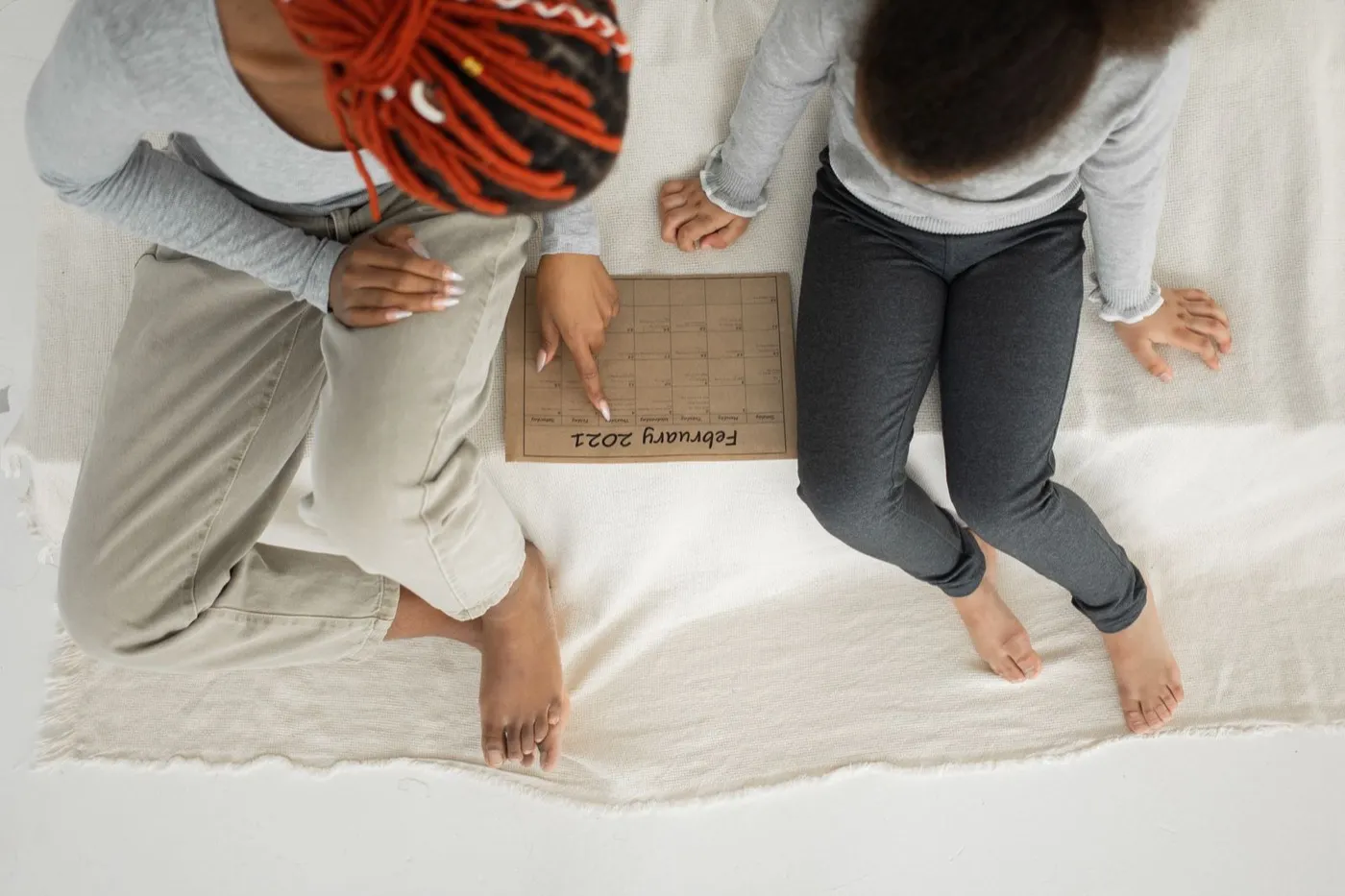
Younger kids do better with a calendar they can see and touch. Use one colour for each home and let them add a sticker each morning. Older kids and teens may want the plan in their phone.
"What's the one thing you really want to do this break?" The answer is often small: latkes with Bubbie, a movie night, a sleepover with a cousin, or just sleeping in. You can usually make room for it.
If you can, agree on a rough budget, or team up on one bigger gift. Kids notice when gifts start to feel like a contest, and it puts them in the middle.
"This year is going to look different, and that's okay. Here's the plan."
"You'll be with Mom for the first nights of Hanukkah and with me for the last nights. We'll light candles at both houses."
"You're allowed to have fun at both homes. You never have to pick."
"If you feel sad or mad about it, you can tell me. I won't be upset with you."
Handoffs are often where the holidays go sideways. A few things make a real difference.
A hug, a "have a great time," and off they go. Long goodbyes make leaving harder for everyone.
Schedule changes, money, and disagreements belong in a text, an email, or a co-parenting app later, not in front of your child. If handoffs at the door tend to get tense, a neutral spot can help.
Let your child choose what comes with them. A favourite stuffy, a blanket, or a hoodie that smells like home can make the other house feel less strange.
Many kids fall apart for an hour or an evening after they come back. It's usually not about what happened at the other home. It's about the transition itself, and the effort of holding it together all day. Our article on after-school restraint collapse explains the same pattern, and the reset steps work here too.
"What did you do? Who was there? Did Dad say anything about me?" can feel like an interrogation, even when you're only curious. Let them share when they're ready. Kids who tend to shut down instead of melting down may need extra time.
If your plan allows it, a short call or video chat with the other parent on the holiday itself can help your child relax and enjoy where they are.
You don't have to recreate the old holidays. You also don't have to throw them all out.
Pick one or two traditions your child loves and keep them going, even if they move to a new home. The same holiday song, the same breakfast, the same ornament.
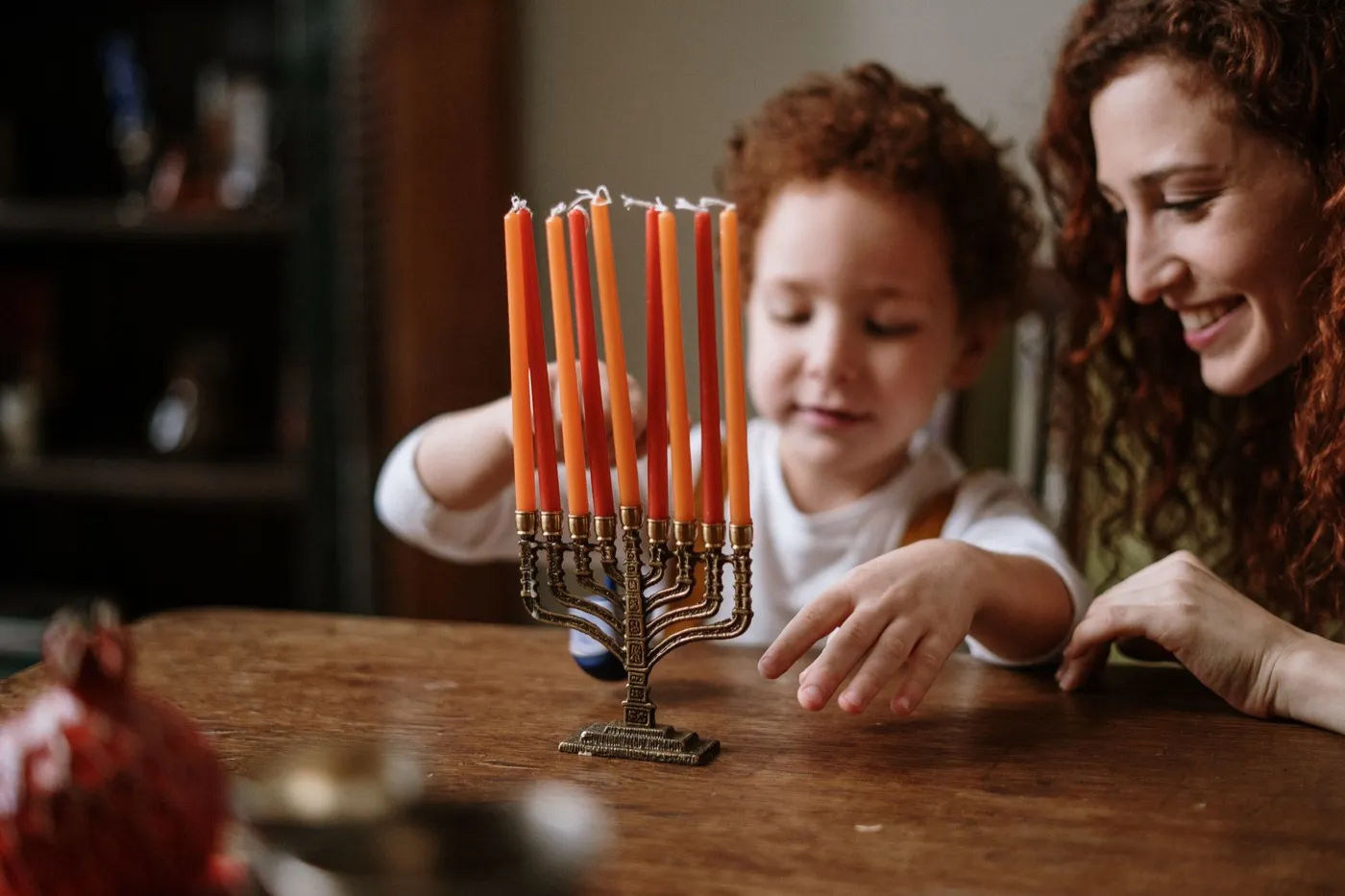
Two Christmas mornings, or lighting the menorah at both homes, isn't confusing for most kids. It often feels like more, not less.
A tradition that belongs to your home now, like a pyjama drive to look at lights or a new recipe you bake together, gives the season a fresh shape.
Many families in Vaughan, Thornhill, and Richmond Hill blend faiths and cultures. After a separation, a child might celebrate Christmas in one home and Hanukkah in the other. Supporting both, without ranking them, tells your child that every part of who they are is welcome.
The holidays don't have to be perfect to be good. A calm, ordinary day often means more to kids than a big one with a stressed-out parent.
Research with teens after divorce points to a few things that make kids feel stuck in the middle: being asked to carry messages, being asked questions about the other home, and hearing one parent put down the other [2]. A few more come up often in our work with families.
If your co-parent does some of these things, you can't control that. You can control what happens in your home, and that still matters a lot.
"You can love both of us. Loving Dad doesn't take anything away from me."
For many parents, this is the hardest part. The house is quiet on the day it used to be the loudest.
Time with friends or family, a volunteer shift, a long walk, a movie you've been saving. An empty day tends to feel longer.
"Our Christmas" on December 27, or the last nights of Hanukkah together, can be just as special. Kids care much more about the time with you than the date on the calendar.
It's okay for your child to know you'll miss them. It's not their job to worry about you. "I'll miss you, and I'm going to have a nice day with Auntie. Have so much fun!" is enough.
A quick call that follows the plan is great. Long, emotional calls can make it harder for your child to settle where they are.
Grief after a separation is real, even when the separation was the right decision. Talking with a therapist can help you get through the season without leaning on your child.

A rough patch over the holidays after a separation is normal. Here's a simple way to think about what your child needs.
If you're worried about your child's safety right now, call 9-1-1, or call or text 9-8-8 (Canada's Suicide Crisis Helpline, available 24/7). Kids and teens can reach Kids Help Phone at 1-800-668-6868 or by texting CONNECT to 686868. If you believe a child is being abused or neglected, contact your local children's aid society.
If you've looked at your parenting plan or court papers, you may have noticed the words "custody" and "access" aren't used anymore. Since March 1, 2021, both Canada's Divorce Act and Ontario's Children's Law Reform Act use parenting time, meaning the time a child spends with each parent, and decision-making responsibility, meaning who makes the big decisions about things like health, education, religion, and activities [6][7].
The holiday schedule is usually part of the parenting plan. If yours doesn't spell out the holidays, or you can't agree, that's a question for a family mediator or family lawyer. The federal Department of Justice has free, plain-language tools for building a parenting plan, plus a booklet written for kids called What happens next? [10]. If you're still sorting out the arrangements, our article on family mediation vs. divorce court explains the options, and our article on resilient co-parenting covers how to work together over the long run.
Therapy plays a different role. A child therapist isn't there to decide the schedule or take a side. We're there to help your child make sense of the changes, handle big feelings, and feel at home in both homes.
If you and your co-parent share decision-making responsibility for health care, you'll generally both need to agree before your child starts therapy [11]. In Ontario, teens who understand what therapy involves can often consent for themselves. Our team can walk you through what's needed when you call.
You don't need to wait for a crisis. Many families reach out in the first year after a separation simply to give their child a safe place to talk, and to have a plan for the hard moments.
Young kids often can't explain how they feel about two homes, but they can show it. In play therapy, toys, figures, and stories give children a way to work through the changes at their own pace. Art therapy does the same through drawing, painting, and making. If your child has been drawing the family differently since the separation, our article on what an art therapist looks for in children's drawings may help.
School-age kids and teens benefit from a place outside either home where they can say things they'd never say to a parent. We use approaches like cognitive behavioural therapy (CBT) to help with worry, anger, and the "it's my fault" thoughts many kids carry. Learn more about therapy for children and therapy for teens.
How parents respond makes a measurable difference. In a randomized trial of New Beginnings, a program for separated mothers and their children, teens who had been struggling most at the start had fewer behaviour problems and fewer symptoms of mental health disorders six years later than teens whose families didn't take the program [5]. Parent coaching can help you respond to your child's big feelings, plan for handoffs, and keep conflict away from your child.
Sometimes the most helpful step is a session with a parent and child together, to repair a rough patch or practise new ways of talking. Our parent-child therapy and family therapy services support families going through big changes.
We see children, teens, and parents at our Thornhill office, serving families across Vaughan, Richmond Hill, Markham, and North York, and we offer online therapy across Ontario. If your teen doesn't want to go, read what to do when your teen refuses therapy.
Settle the schedule early and tell your child the plan ahead of time, together with your co-parent if you can. Keep one or two favourite traditions, start a new one, keep handoffs short and calm, and give your child clear permission to enjoy both homes. Expect some big feelings, and let them talk about missing the other parent without getting upset.
Common arrangements include alternating holidays each year, splitting the day itself, splitting winter break into two halves, or celebrating twice on different days. If your parenting plan or court order covers the holidays, follow it. If it doesn't, or you can't agree, a family mediator or family lawyer can help.
Yes, it's very common. Transitions take a lot of effort, and many kids fall apart once they're back somewhere they feel safe. Give them some quiet time, a snack, and a predictable routine, and avoid asking a lot of questions right away. If the behaviour is intense or lasts more than a day or two after most handoffs, talk to a therapist.
Children and teens should have a voice, and older kids especially do better when they feel heard. But the final decision should stay with the adults. Asking a child to choose between parents puts them in the middle and can leave them feeling guilty whichever way they decide.
Plan your day ahead of time with people or activities you enjoy, and set a different day to celebrate with your kids. It's fine to tell your child you'll miss them, but try not to make them responsible for your feelings. If the sadness is hard to manage, talking with a therapist can help.
Since March 1, 2021, Canada's Divorce Act and Ontario's Children's Law Reform Act no longer use "custody" and "access." Parenting time is the time a child spends with each parent. Decision-making responsibility is about who makes major decisions for the child, such as decisions about health, education, religion, and significant activities.
Consider reaching out if your child's distress lasts for weeks, if they regress, stop enjoying friends and activities, avoid school, have new or frequent meltdowns, blame themselves for the separation, or are very distressed about going to one home. Many families also come in early, simply to give their child a safe place to talk. If your child talks about hurting themselves or you're worried about their safety, get help right away.
Yes. Young Sprouts Therapy supports children, teens, and parents through separation and divorce at our Thornhill office, serving families across Vaughan, Richmond Hill, Markham, and North York. We also offer online therapy across Ontario. Our team offers play therapy, art therapy, therapy for children and teens, parent coaching, parent-child therapy, and family therapy. Services are provided by Registered Psychotherapists and Registered Social Workers, which many extended health plans cover.
The first holidays after a separation will probably look different from the ones your child remembers. Different doesn't have to mean worse. When kids know the plan, feel free to love both parents, and get to keep a few of the things that make the season theirs, they can come through this year with good memories, too.
If the holidays are bringing up more than you expected for your child, or for you, we're here to help.
Book a free 15-minute consultation or learn more about family therapy and therapy for children in Vaughan and Thornhill.
This article is for general information only and is not a substitute for professional, medical, or legal advice. If you're worried about your child's safety, call 9-1-1 or call or text 9-8-8.