
When a child shuts down emotionally, it can feel more confusing than a meltdown — because there's nothing visible to respond to. This guide explains why it happens and gives you real, therapist-backed strategies to help.
You know the moment. Something happens — a hard day at school, a conflict with a sibling, a "no" they didn't want to hear — and instead of the tears or the outburst you might expect, your child just… goes quiet. One-word answers. Avoiding your eyes. "I don't know." Leaving the room.
It can feel almost harder than a tantrum. At least a tantrum tells you something. The shutdown leaves you standing in a silence you don't know how to enter.
You might try asking more questions. You might try giving them space. You might wonder if you did something wrong, or if something is seriously wrong with them. You might feel shut out, helpless, or — if this happens often — quietly worried.
Here's what most parents aren't told: emotional shutdown isn't defiance, and it isn't a personality flaw. It's a nervous system response — the brain's freeze reaction — and once you understand what's driving it, you can respond in ways that actually help your child feel safe enough to come back to you.
This guide walks you through why it happens, what not to do (even though those things feel instinctive), and step-by-step strategies grounded in child therapy that you can start using today.
Key Takeaways
| Shutdown = protection | It's not misbehaviour — it's the nervous system doing its job in an overwhelming moment. |
| Quiet ≠ fine | Children who shut down can feel just as intensely as children who melt down. The emotion is internal, not absent. |
| More talking ≠ more connection | Pushing a child to talk during shutdown often deepens the withdrawal. |
| Safety comes first | Your child needs to feel safe before they can communicate. Connection precedes conversation. |
| Small shifts = big breakthroughs | Minor changes in how you show up in these moments can transform the dynamic over time. |
Why Some Kids Shut Down Instead of Melting Down
To understand emotional shutdown, you need to understand one of the brain's most fundamental survival systems: fight, flight, or freeze.
When a person — child or adult — perceives a threat, the brain's threat-detection system kicks in automatically. Fight means confronting the threat. Flight means escaping it. And freeze means going still, going quiet, going inward — a kind of protective shutdown that evolved to help animals survive danger.
In children, the freeze response gets triggered not just by physical threats but by emotional ones: the fear of getting in trouble, the overwhelm of a difficult day, the dread of a hard conversation, the weight of feeling like they've disappointed someone they love.
Psychologists distinguish between externalizers and internalizers. Externalizing children respond to stress by pushing it outward — through tantrums, aggression, or crying. Internalizing children pull it inward — withdrawing, shutting down, disconnecting. Peer-reviewed research on internalizing and externalizing behaviours in children consistently shows that internalizing behaviours are significantly underidentified, because they don't create the same visible disruption as externalizing ones.
In our work with children at Young Sprouts Therapy, we often see kids who appear calm on the outside but are overwhelmed internally — children whose emotional systems are working very hard, in a very quiet way. Understanding this is the first step toward responding in a way that helps.
Common triggers for shutdown in children include:
- School overwhelm — academic pressure, social stress, or a conflict with a peer or teacher
- Fear of consequences — especially in children who are sensitive to disappointing adults
- Sensory overload — a day that was too loud, too busy, too much
- Transition stress — moving between homes, schools, or routines
- Anxiety about relationships — friendship problems or feeling like they don't belong
Signs Your Child Is Shutting Down (That Are Easy to Miss)
Because shutdown is quiet, it often goes unnoticed — or gets misread as attitude, introversion, or simply "being fine." Here's what to actually look for.

- Goes very quiet or gives only one-word answers
- Avoids eye contact or looks through you
- Leaves the room, retreats to their bedroom, or hides
- Says "I don't know" or "I'm fine" repeatedly, even when clearly not fine
- Appears blank or disconnected — present physically but absent emotionally
- Stops eating, playing, or engaging with things they normally enjoy
- Becomes unusually still — no crying, no movement, almost no expression
It's important to distinguish shutdown from other things it can look like:
Shutdown
- Stress-triggered response
- Often sudden change in behaviour
- Child seems internally overwhelmed
- Usually passes with co-regulation
Not shutdown
- Introversion (personality trait, not stress response)
- Deliberate defiance
- Just being tired or hungry
- General quietness that doesn't follow stress
If you're seeing your child frequently and suddenly shut down in response to emotionally loaded situations, that's worth paying attention to — even if they seem "fine" on the surface.
Children who struggle with anxiety are particularly prone to shutdown responses. Anxiety and the freeze response are deeply connected neurologically, and quiet children with anxiety are often missed precisely because they're not causing problems.
What NOT to Do When Your Child Shuts Down
We know how tempting it is to try harder in these moments. When your child goes quiet and withdraws, every parenting instinct says: reach in further. But the strategies that feel most natural are often the ones that deepen the shutdown. Here's what to avoid:
⚠ Common Mistakes That Backfire
These responses feel right in the moment but typically increase shutdown rather than reduce it.
Pushing them to talk ("Use your words")
When the nervous system is in freeze mode, the verbal, reasoning parts of the brain are literally less accessible. Demanding language in this state is like asking someone to sprint on a broken leg. The demand itself increases the sense of threat, which deepens shutdown.
Asking too many questions
A flood of "What happened? What did they say? How did that make you feel?" lands as interrogation when a child is already overwhelmed. Even well-intentioned questions increase cognitive load at exactly the wrong moment.
Lecturing or problem-solving too quickly
Moving to "Here's what you should do next time" before a child feels heard and safe is one of the most common ways parents inadvertently shut down connection. Zero to Three, a leading child development organization, emphasizes that emotional validation must come before problem-solving for children to integrate learning.
Taking it personally
When a child won't talk to you, it's easy to feel rejected. But their shutdown is almost never about you — it's about their own overwhelm. Responding from hurt ("Fine, if you don't want to talk to me…") adds relational pressure that compounds the problem.
Filling the silence with your own anxiety
Parents are often more uncomfortable with silence than their children are. Rushing to fill it — with reassurances, explanations, or more questions — can signal to the child that the silence itself is dangerous, making it harder to stay regulated.
What Actually Helps: A Step-by-Step Approach
The good news: even small shifts in how you respond to shutdown can create profound change over time. These strategies are drawn from family therapy approaches and are grounded in what we know about how children's nervous systems regulate and recover.
1. Regulate First, Talk Later
Before any meaningful conversation can happen, your child's nervous system needs to come down from the freeze response. This is called co-regulation — and it relies entirely on your regulated presence, not your words.
What this looks like in practice: slow your own breathing, soften your face, lower or steady your voice, reduce physical proximity to a non-threatening level. Harvard Health research on co-regulation and big emotions shows that a calm, attuned caregiver is literally the most powerful tool for regulating a child's nervous system. Your state shapes theirs.
2. Lower the Pressure to Respond
Explicitly removing the demand for conversation reduces the threat load immediately. Try: "You don't need to talk right now. I just want you to know I'm here." This simple statement signals safety without withdrawing your presence.
For children who are particularly sensitive to pressure, even asking "Are you okay?" can feel like a demand. Silence and physical proximity, without any question attached, can be more powerful than words.
3. Use Indirect Connection
Many children find it easier to reconnect through side-by-side activity than face-to-face conversation. This is why the car is one of the best therapy rooms there is — no eye contact required, movement provides gentle sensory regulation, and there's a natural endpoint to the shared experience.
Other indirect connection strategies:
- Parallel play — sit near your child and do something quiet of your own (reading, a puzzle, folding laundry)
- Shared physical activity — a walk, shooting hoops, colouring together
- Low-stakes humour — a gentle, non-targeted joke can sometimes break the freeze without requiring verbal engagement
4. Name Feelings Gently — Without Forcing a Response
Once your child seems even slightly more regulated, you can try a soft, tentative reflection of what you're observing. The key is framing it as wonder rather than assertion, and requiring nothing back.
"I wonder if today just felt like a lot."
"That sounds like it might have been really hard."
"I get it if you're not ready to talk. That makes sense."
This approach, rooted in emotion coaching principles, validates the emotional experience without requiring the child to perform emotional openness before they're ready. Over time, it teaches children that their inner world is safe to acknowledge — which makes them more likely to open up when they're able.
Save This: A Script for Shutdown Moments
"You don't have to talk right now.
I'm here with you.
We can just sit together until your body feels a little safer."
Say it once, quietly. Then follow through — just sit. No questions. No filling the silence. You're showing your child that your presence isn't contingent on their performance.
How to Build Emotional Safety Over Time
Managing individual shutdown moments is important — but the deeper goal is building a relationship in which your child feels safe enough that shutdown happens less frequently, and recovery happens more quickly. That kind of emotional safety is built gradually, through consistent small moments.
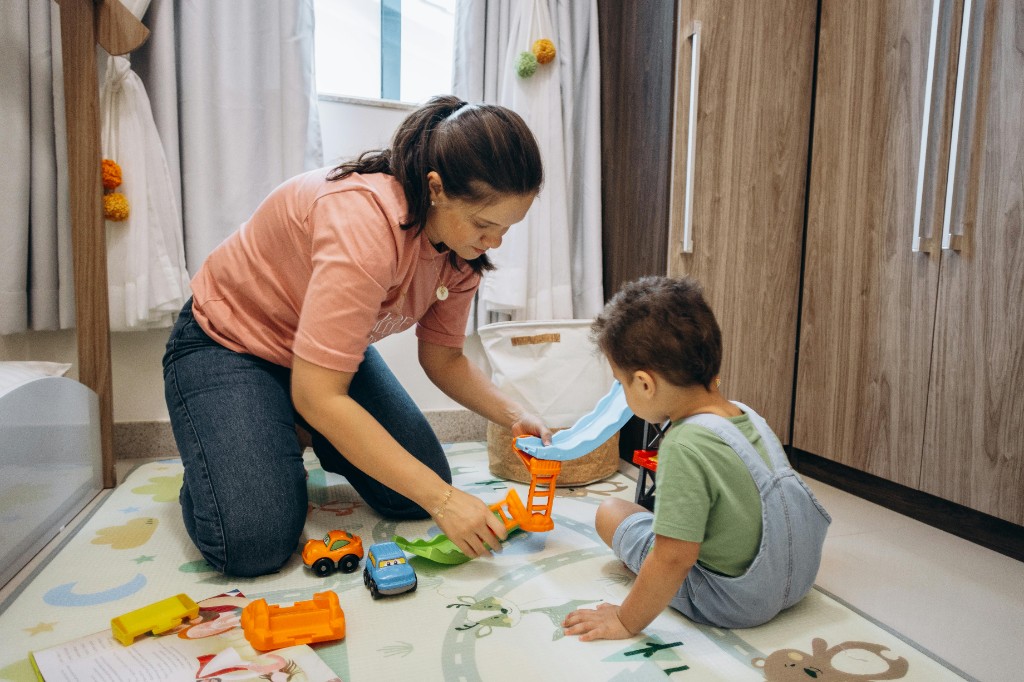
Maintain predictable, non-reactive responses
Children who shut down are often kids who have learned — through experience — that their emotional expressions have unpredictable consequences. When you respond to their withdrawal with calm consistency instead of frustration or escalation, you're slowly rewriting that learned association. The CDC identifies safe, stable, nurturing relationships and predictable, responsive caregiving as core protective factors for children's emotional resilience.
Repair after moments of disconnection
You won't handle every shutdown perfectly. There will be times you push too hard, ask too many questions, or show your frustration. What matters most isn't perfection — it's repair. Coming back after a hard moment ("I think I asked too many questions earlier, and I'm sorry") teaches your child that relationships can survive rupture. That knowledge is foundational to emotional security.
Model emotions openly but calmly
Children learn emotional language from watching how adults handle their own feelings. When you name your own emotions out loud — "I'm feeling a bit frustrated right now, so I'm going to take a few breaths before we talk" — you demonstrate that feelings can be acknowledged and managed rather than suppressed or exploded. The Gottman Institute's emotion coaching research consistently finds that children who grow up with emotionally expressive, regulated parents have significantly better emotional outcomes.
Create low-stakes openings regularly
Don't reserve emotional connection for crisis moments. Build in regular, low-pressure check-ins — at bedtime, in the car, over a snack — where talking about feelings is normal and not associated with being in trouble. When connection is routine, it becomes easier to access when things are hard.
When to Seek Extra Support
Many children go through phases of emotional shutdown, especially during transitions or periods of stress. But there are signs that additional support may be needed:
- Shutdown is happening frequently and doesn't improve with consistent, supportive responses at home
- Your child seems persistently withdrawn, not just in hard moments but generally
- Shutdown is beginning to affect school performance, friendships, or daily functioning
- Your child shows other signs of anxiety — avoidance of school, separation difficulties, physical complaints (stomachaches, headaches) without a medical cause
- You suspect there may be underlying trauma, a significant stressor, or a neurodevelopmental consideration that hasn't been addressed
Many families we support at Young Sprouts Therapy find that having a dedicated, safe space — separate from home — gives their child permission to open up in ways they haven't been able to at home. This isn't a failure of parenting; it's the nature of how emotional safety sometimes works for children. A skilled child therapist can also coach parents on specific approaches tailored to their child's temperament and nervous system profile.
If you're in Thornhill, Vaughan, Richmond Hill, or North York — or anywhere in Ontario via virtual services — we'd be glad to connect. Reach out to our team for a free consultation.
💭 Reflection Questions for Parents
- When my child shuts down, what's my first instinct — and is it helping or deepening the withdrawal?
- What might my child be protecting themselves from in these moments?
- How can I signal safety and presence without requiring anything in return?
- Are there patterns I'm noticing — certain times of day, certain triggers, certain situations — that consistently precede shutdown?
Frequently Asked Questions
Why does my child shut down emotionally?
Emotional shutdown is usually a freeze response — the nervous system's way of protecting a child from overwhelming feelings it doesn't know how to process. It's not defiance or manipulation. It's the brain's threat-detection system doing its job, even when the "threat" is a difficult conversation or a stressful day. Children who are more sensitive, anxious, or who have experienced unpredictability in their relationships are more prone to this response.
Is shutting down a trauma response in kids?
It can be, but it doesn't require trauma in the traditional sense. Any experience that consistently overwhelms a child's ability to cope — chronic stress, social anxiety, fear of disappointing a parent — can train the nervous system toward shutdown as a default. If shutdown is frequent, severe, or accompanied by other signs of distress, a child therapist can help assess whether deeper support is needed — including trauma therapy if trauma turns out to be a factor. SAMHSA's resources on childhood trauma offer further context for families exploring this question.
How do you communicate with a child who won't talk?
The key is removing the pressure to communicate first. Sit nearby without demanding conversation. Use parallel activities — driving, drawing, walking. Offer gentle, low-pressure observations ("You seem like today was a lot") that don't require a response. Let silence be okay. Connection, not words, is the goal in the moment. Once your child is regulated, conversation becomes possible again on its own.
What are signs of anxiety in quiet children?
Quiet children with anxiety may go very still during stress, give one-word answers, avoid eye contact, leave the room, or say "I'm fine" in a tone that clearly isn't. They may also complain of stomachaches or headaches, avoid school or social situations, become clingy in calm moments, or have difficulty sleeping. Because these children aren't causing disruption, their anxiety is frequently missed. If you recognize several of these signs, anxiety support for children may be worth exploring.
Is it normal for kids to withdraw instead of cry?
Yes, completely. Children have different nervous system profiles — some externalize stress (cry, yell, tantrum) and some internalize it (withdraw, go quiet, shut down). Both are normal variations in how children process difficulty. Neither is inherently better or worse, though internalizing responses are more easily missed and often go without support for longer.
Should I force my child to talk?
No — and this is one of the most important things to understand. Forced conversation during a shutdown state typically deepens withdrawal rather than breaking it. The nervous system needs to feel safe before language becomes accessible. Your goal in the moment is regulated presence, not conversation. The talking can come later, and it usually will, once safety is established.
Can therapy help a quiet, withdrawn child?
Yes. Play therapy and other child-centred modalities are specifically designed for children who struggle to articulate their inner world in words. A skilled therapist meets children where they are — through play, art, movement, and relationship — rather than requiring verbal disclosure before the child is ready. Many of the children we work with at Young Sprouts Therapy are described by their parents as quiet or closed off, and they make profound progress through approaches that work with their nervous system rather than against it.
Your Child Doesn't Have to Talk to Feel Understood
If there's one thing we hope you take from this article, it's this: connection doesn't always look like conversation.
When your child shuts down, they aren't rejecting you. They're managing something they don't yet have the tools to manage alone. And your quiet, steady presence — even without any words — is doing more than you know.
The strategies here won't transform everything overnight. But small, consistent shifts in how you show up in the hardest moments have a compounding effect over time. Your child is watching. And slowly, they're learning that their emotional world is safe to come back from — because you'll be there when they do.

If you'd like professional support for your child or family, our team at Young Sprouts Therapy offers child therapy, anxiety treatment, and family therapy for children, teens, and families in Thornhill, Vaughan, Richmond Hill, North York, and across Ontario via virtual services.
Is Your Child Struggling to Open Up?
Our team of child and family therapists in Thornhill and Vaughan — and across Ontario virtually — specializes in helping quiet, anxious, and emotionally sensitive children find their way back to connection.
Book a Free Consultation →