You planned the perfect Saturday. Hot chocolate in the car, a drive north of the city, and a Christmas tree farm with a wagon ride. Forty minutes in, your six-year-old is face down in the snow because her sister picked the tree. Your teenager hasn't looked up from his phone since you left the driveway. And you're standing there holding a saw, wondering why you bother.
If that sounds familiar, your family isn't failing at the holidays. You're seeing what happens when everyone's stress peaks at the same time.
The weeks between late November and early January ask a lot of every age. Kids lose their routines. Teens lose sleep and retreat. Parents carry the planning, the hosting, the money and the memories. And because families are connected, one person's stress quickly becomes everyone's.
Below, we'll look at how holiday stress tends to show up in children, teens and parents, how it moves around a family, what actually helps, and how to tell when it's more than a hard week.
Why the holidays hit the whole family at once
Holiday stress is common. In a 2023 American Psychological Association poll, 89% of U.S. adults said something about the season caused them stress, and 41% said their stress goes up during the holidays compared with the rest of the year. Money topped the list at 58%, followed by finding the right gifts (40%) and missing loved ones (38%) [1]. That poll was American, but we see the same pattern in our Thornhill office every December.
For families, a few things stack up at once.
Routines disappear. In the York Region District School Board and most other GTA boards, winter break runs from Monday, December 21, 2026 to Friday, January 1, 2027 [7]. Hanukkah starts well before that, at sundown on Friday, December 4, and ends on Saturday, December 12 [8]. For many families in Thornhill and Vaughan, that means eight nights of candle lighting, parties and late dinners, mostly on school nights, before the break even begins. Then come Christmas and New Year's. Bedtimes, mealtimes and screen rules all loosen.
Sleep slips. This matters more than most parents expect. In a Canadian study, children aged 8 to 12 went to bed one hour later than usual for just four nights. Compared with the nights they went to bed an hour earlier, they had a harder time regulating their emotions and did worse on memory and attention tasks [2]. A study of teens aged 14 to 17 found that five nights of short sleep (6.5 hours in bed) made them more irritable and oppositional, according to both the teens and their parents [3].
Stress spreads. Kids don't only hear stress. They feel it in their bodies. In one study, mothers gave a stressful speech and received critical feedback before being reunited with their 12- to 14-month-old babies. Within minutes, the babies' heart rates went up, tracking their mothers' stress [4]. Older kids are even more tuned in to the mood in the room.
Expectations go up. The holidays come with a picture of how things are supposed to look. When real life doesn't match, everyone feels the gap.
There's good news here, too. Family routines and rituals are protective. A review of 50 years of research found they were linked to more confident parenting, better child adjustment and happier marriages [5]. The goal isn't to cancel the holidays. It's to keep enough structure in place that everyone can actually enjoy them.
Kids: the meltdown
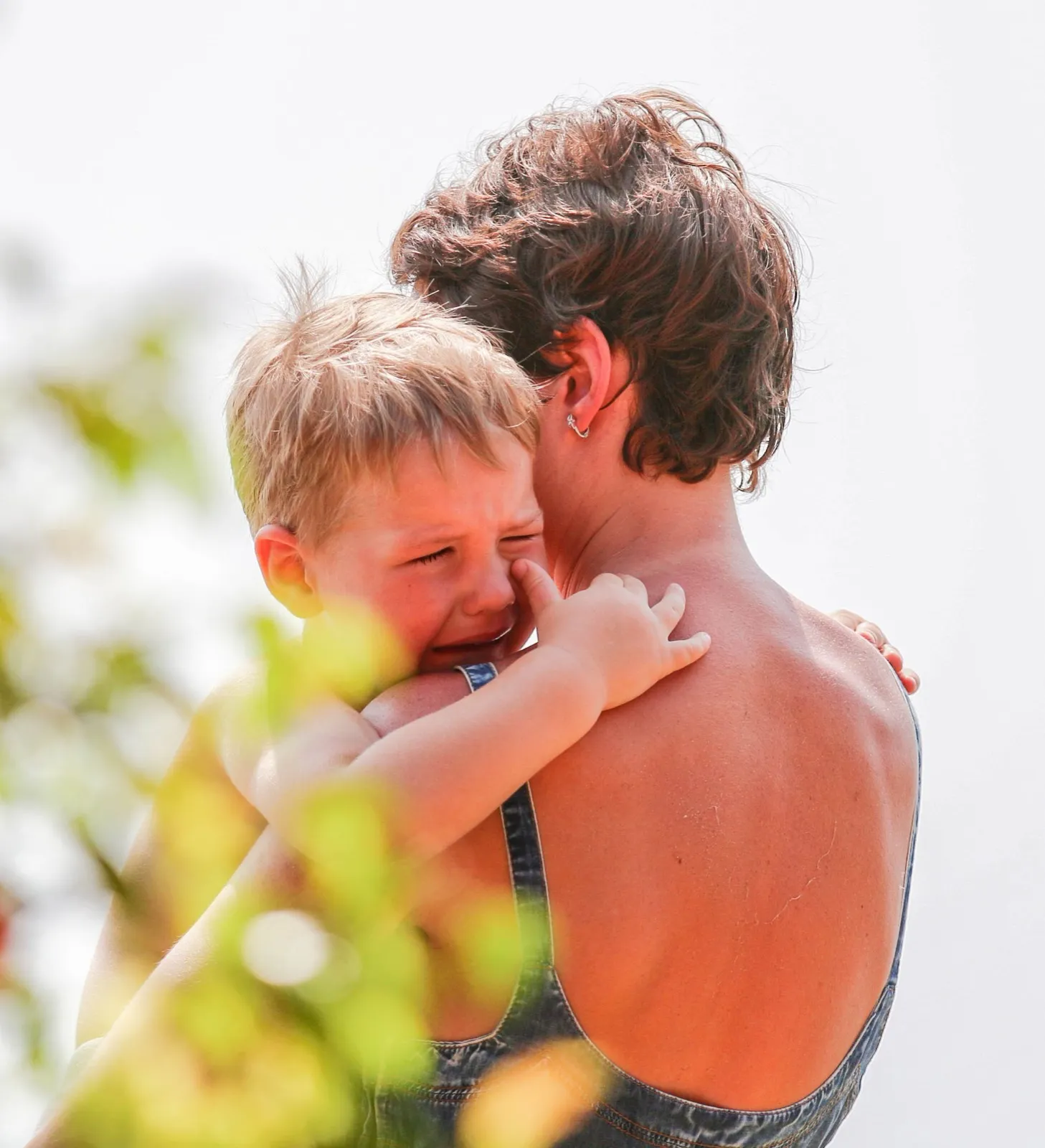
For younger children, holiday stress usually shows up as behaviour. A meltdown at the tree farm doesn't mean your child is ungrateful or spoiled. More often it means their tank is empty: too much noise, too many new faces, a late night, a missed snack, and a long wait for something exciting.
What's typical:
More tantrums, tears or whining, especially late in the day
Clinginess at big gatherings, hiding behind you, or refusing to greet relatives
Wild, silly energy that suddenly tips into crying
Trouble falling asleep after an exciting day
A rough day after a big event
Kids who are sensitive to noise and crowds, or who live with anxiety, ADHD or autism, often feel all of this more strongly. So do kids who hold it together all day and fall apart once they're home, a pattern we explain in our article on after-school restraint collapse.
What helps:
Protect sleep and meals on the days that matter most. A snack in your bag prevents a surprising number of tears.
Preview the day. "We'll drive to the farm, pick a tree, have hot chocolate, then come home and rest."
Plan a quiet spot at every gathering: a bedroom, the car, or a walk around the block.
Limit the big outings. One per day is plenty for most young kids.
Expect the crash. Plan a calm, low-key evening after a big day.
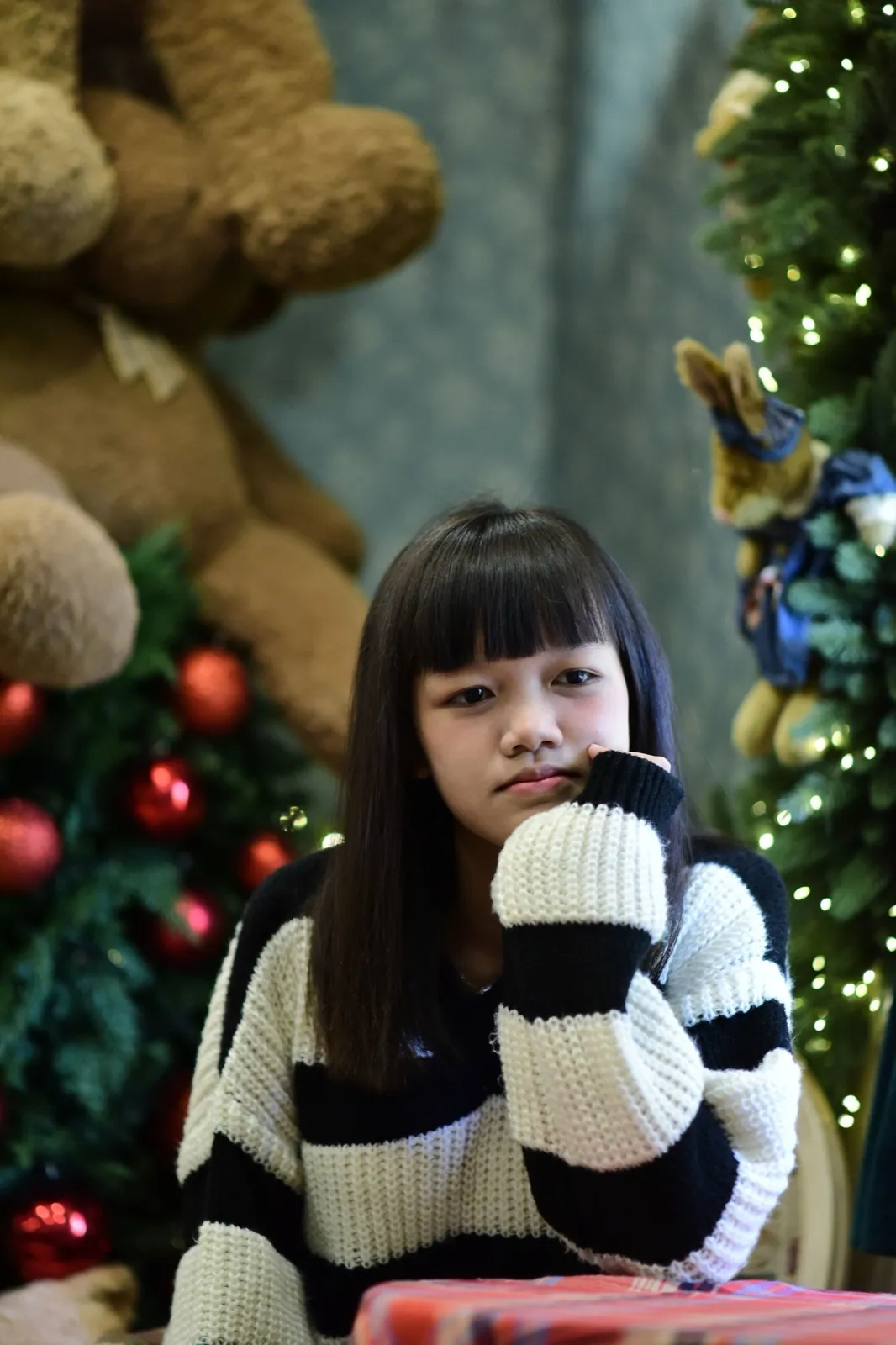
Teens rarely melt down at the tree farm. More often, they disappear: into their room, their phone, their headphones, or a friend's basement. Some of this is healthy. Teens are supposed to pull away from family a little, and a break from school can be a welcome chance to rest.
What's typical:
Sleeping late and staying up later
More time with friends and less interest in family events
Eye-rolling at traditions they loved when they were nine
Irritability, especially when plans get sprung on them
Dreading certain relatives' questions about grades, university, weight or relationships
What helps:
Give them a real say. Ask which one or two events matter most to them, and which ones they can skip or attend for an hour.
Build in an exit. Let them bring a friend, or agree ahead of time on when they can leave.
Head off the hot-button topics. If you can, ask relatives to skip the questions about marks and weight. If you can't, help your teen plan a polite line to use.
Keep some sleep structure. Sleeping in is fine. Flipping day and night for two weeks makes the return to school in January much harder.
Find one low-pressure way to connect. A drive, a show you both like, or cooking something together. Teens often talk more when you're side by side than face to face.
Holiday stress often lands hardest on parents, and it tends to be invisible. You're the one remembering the teacher gifts, the latke oil, the cousin's allergy, the dinner at your in-laws', the budget, and the fact that your eight-year-old needs new boots. Meanwhile, the season can stir up your own history: the parent you've lost, the family you grew up in, or the holidays you wish you'd had.
Signs your own tank is low:
Snapping at your kids or partner over small things, then feeling guilty
Lying awake running lists
Dreading a particular gathering or relative for weeks ahead
Reaching for wine or your phone more than usual to cope
Feeling sad, flat or lonely in the middle of a "happy" season
Resentment about carrying most of the planning
What helps:
Cut one thing. Then cut one more. Most families do more in December than anyone actually enjoys.
Divide the mental load out loud. Sit down with your partner or co-parent and decide who owns gifts, who owns food, and who drives.
Set a spending limit before December gets going, not after.
Schedule your own recovery, even if it's 20 minutes with a coffee and a closed door.
Decide ahead of time how you'll respond to the relative who always says something.
Remember the research on how stress spreads [4]. Looking after yourself also helps your kids. When you're calmer, they have more calm to borrow.
If stress, low mood or old family patterns are following you around long after the decorations come down, talking to someone can help. We offer adult therapy in Vaughan for parents and other adults dealing with stress and burnout, anxiety, low mood, grief, life transitions and family conflict. If you mostly want help responding to your child, parent coaching is another good option.
When it's the family pattern, not one person
Sometimes the holidays don't create a new problem. They put a spotlight on one that's been there all year.
Here are some of the holiday loops we see most often:
The pile-on. A child melts down, a grandparent comments, the parent feels judged and gets sharper with the child, and the child escalates.
The tug-of-war. Partners disagree about how much to do, whose family to see, or how strict to be, and the kids pick up on the tension.
The sibling flashpoint. Long days together with no school to break them up turn small rivalries into daily fights.
The cold war. Nobody yells, but everyone's tense. Research shows that conflict between parents affects children's emotional, behavioural, social and school outcomes, and that includes quiet, unresolved conflict, not only loud arguments [6].
Two traditions, one calendar. Many interfaith and blended families in Vaughan, Thornhill and Richmond Hill juggle Hanukkah, Christmas and extended family on both sides. The season can also feel isolating when the culture around you doesn't reflect your own. In the APA poll, 23% of people who celebrate Jewish holidays said they felt stress because the season doesn't reflect their culture or traditions, compared with 7% of people who celebrate Christian holidays [1].
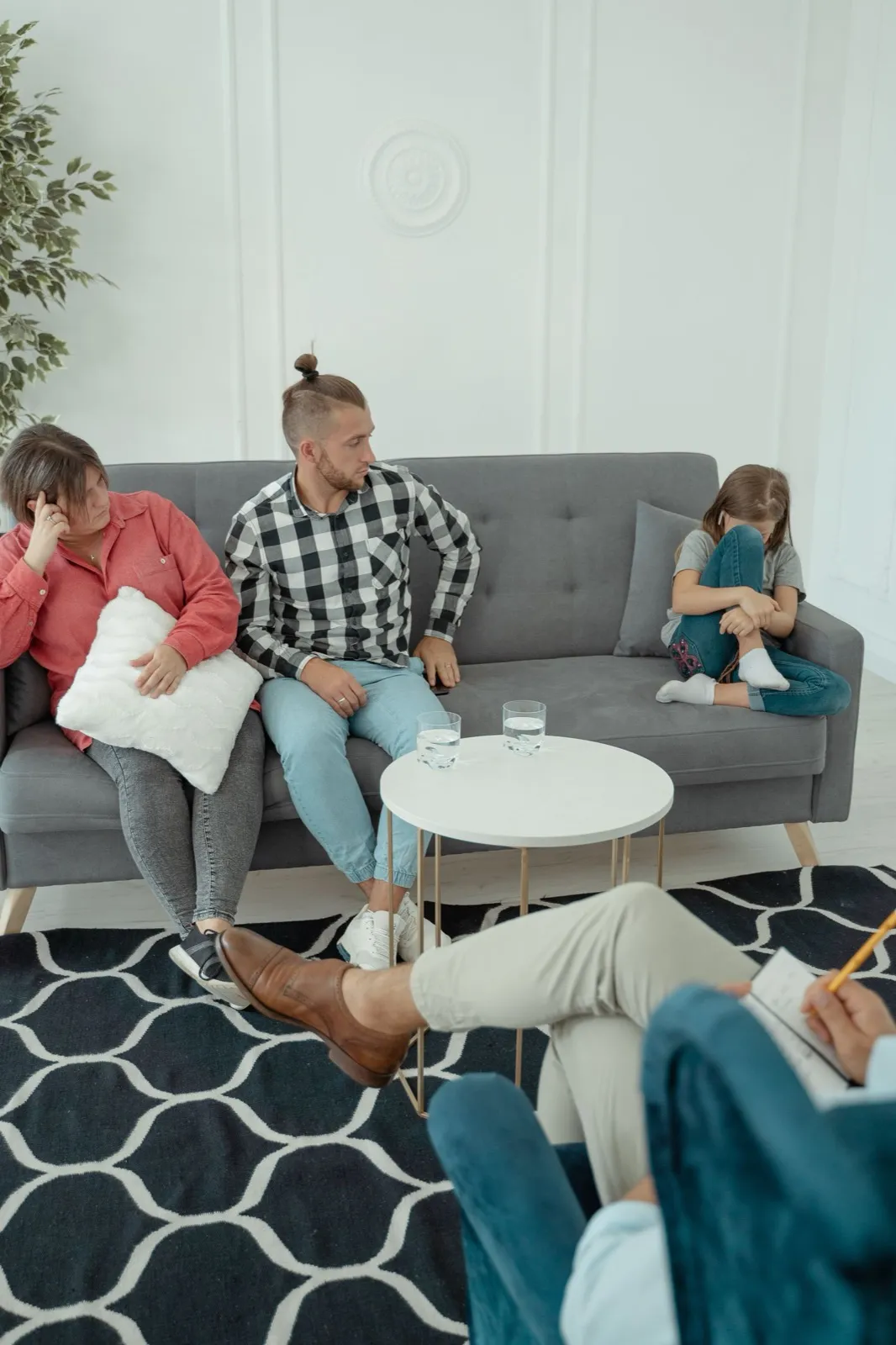
When the same fight happens every year, it's rarely about the brisket or the tree. It's about roles, expectations and how the family handles stress together. That's what family therapy in Vaughan is built for. Families work on how they talk to each other, how they repair after a blowup, and how to make decisions without the same person always ending up as the bad guy. If most of the strain is between you and your partner, couples counselling can help too.
You don't need a perfect holiday. You need a plan that protects the basics. Here's one that works for most families.
Before
Hold a 15-minute family meeting. Each person names one thing they really want to do this season, and one thing they'd happily skip.
Put the big events on a calendar everyone can see, with rest days in between.
Agree on a budget for gifts and outings.
Prepare kids for gatherings. Who will be there, how long you'll stay, where the quiet spot is, and what to say if someone asks a question they don't want to answer.
Pick a signal with your partner that means "I need a break" or "it's time to go."
During
Keep a few anchors. Wake-up time within an hour or so of usual, regular meals, and some time outside every day.
Tag out. One parent handles the kids for an hour while the other takes a breather, then you switch.
Leave while it's still going well. Ending on a good note beats pushing for one more hour.
Help first, talk later. When a child melts down, get low, keep your voice quiet, move somewhere calmer, and save the lesson for when everyone has settled.
Try saying:
"This is a lot of people. Want to take a break with me?"
"You don't have to hug anyone. A wave or a high five is fine."
To a teen: "Give me an hour at Grandma's, and then you can head to Sam's."
To your partner: "I'm getting overwhelmed. Can you take over for 20 minutes?"
After
Plan a "nothing day" after each big event. Pyjamas, leftovers, no plans.
Ease back into school routines a few days before classes start again on Monday, January 4. Move bedtimes and wake-up times back gradually.
Debrief as a family. "What was the best part? What would we change next year?" Write the answers down and look at them next November.
If your child is a perfectionist who melts down when the gingerbread house doesn't look like the picture, our article on perfectionism in children and teens may also help.
When holiday stress is more than holiday stress
A hard week over the holidays is normal. Here's a simple way to tell when it might be something more.
Who
Usually holiday stress
Worth booking a consultation
Young kids
Tantrums and tears on busy days, clinginess at gatherings, a rough day after a big event
Meltdowns most days for weeks, continuing after the break ends; going back to earlier behaviours like bedwetting; intense fear of gatherings or of being apart from you; aggression that's new or hard to manage
Teens
Sleeping in, more time alone or with friends, eye-rolling at traditions
Pulling away from friends too; low mood most days for two weeks or more; big changes in eating or sleep; dreading the return to school so much they refuse to go
Parents
Feeling stretched, more irritable than usual, tired of hosting
Feeling hopeless, numb or constantly on edge; relying on alcohol to get through; dread that started in the fall and isn't lifting; snapping at your kids in ways that worry you
The whole family
A few blowups that settle quickly
The same fight every year; kids caught in the middle of adult conflict; a family that can't seem to recover after arguments
Get help today
Your child or teen talks about wanting to die, not wanting to be here, or hurting themselves
You're having thoughts of harming yourself, or you're worried about anyone's safety at home
If you're worried about safety right now, call 9-1-1, or call or text 9-8-8 (Canada's Suicide Crisis Helpline, available 24/7). Kids and teens can reach Kids Help Phone at 1-800-668-6868 or by texting CONNECT to 686868.
Getting support in Vaughan and York Region
Young Sprouts Therapy supports children, teens, adults and families at our office at 1137 Centre Street in Thornhill, serving families across Vaughan, Richmond Hill, Markham and North York. We also offer online therapy across Ontario, which can be easier to fit in during a busy season.
For kids: play, art and cognitive behavioural approaches through therapy for children
For teens: a space of their own to talk through stress, mood and pressure
For adults and parents: individual counselling for stress, anxiety, low mood and family strain, plus parent coaching
For the whole family: family counselling and couples counselling
Many families reach out in December so they can start January with a plan instead of waiting for the next blowup. Our team includes Registered Psychotherapists and Registered Social Workers, whose services many extended health plans cover. You can read more about our fees and insurance coverage.
Frequently asked questions
Why does my child have more meltdowns during the holidays?
The holidays combine several things that are hard for young kids: later bedtimes, irregular meals, crowds, noise, new people and a lot of waiting for exciting things. Even a few nights of shorter sleep can make it harder for children to manage their emotions. Most holiday meltdowns are a sign your child is overloaded, not misbehaving. Protecting sleep, previewing the day and planning quiet breaks usually help.
Is it normal for my teen to isolate over winter break?
Some pulling away is normal. Teens often want more time alone or with friends, and they tend to sleep later during the break. It's more concerning if your teen is also pulling away from friends, seems low most days for two weeks or more, has big changes in sleep or eating, or dreads going back to school. If you see those signs, it's worth talking to a therapist.
How do I cope with holiday stress as a parent?
Start by doing less. Cut events that nobody really enjoys, set a budget early, and split the planning out loud with your partner or co-parent. Schedule short breaks for yourself, and decide ahead of time how you'll handle difficult relatives. If stress, low mood or dread keeps building, individual therapy can help you sort out what's driving it.
How can we reduce family conflict at holiday gatherings?
Plan ahead. Agree with your partner on how long you'll stay and pick a signal for when it's time to go. Prepare your kids for who will be there, give them a quiet spot, and leave while things are still going well. If the same conflict comes up every year, family therapy can help everyone change the pattern rather than just getting through it.
When should we see a therapist for holiday stress?
Consider reaching out if the stress lasts for weeks, keeps going after the holidays end, or gets in the way of school, work, sleep or relationships. That includes kids with daily meltdowns, teens who withdraw from everyone, parents who feel hopeless or constantly on edge, and families stuck in the same fight. If anyone talks about hurting themselves, get help right away by calling or texting 9-8-8.
Does Young Sprouts Therapy offer therapy for adults and families in Vaughan?
Yes. Along with therapy for children and teens, Young Sprouts Therapy offers adult therapy, parent coaching, couples counselling and family therapy at our Thornhill office, serving Vaughan, Richmond Hill, Markham and North York. We also offer online therapy across Ontario. Our team includes Registered Psychotherapists and Registered Social Workers, whose services many extended health plans cover.
A calmer season, not a perfect one
Your family doesn't need a flawless December. It needs enough sleep, enough breaks, and a few traditions that still feel good. When kids, teens and parents each get a little of what they need, the whole family has more room to enjoy the season, tree farm and all.
If this time of year is bringing up more than you expected, for your child, your teen or yourself, we're here to help.
Baum KT, Desai A, Field J, Miller LE, Rausch J, Beebe DW. Sleep restriction worsens mood and emotion regulation in adolescents. J Child Psychol Psychiatry. 2014;55(2):180-190. doi:10.1111/jcpp.12125. https://pubmed.ncbi.nlm.nih.gov/24889207/
Waters SF, West TV, Mendes WB. Stress contagion: physiological covariation between mothers and infants. Psychol Sci. 2014;25(4):934-942. doi:10.1177/0956797613518352. https://pubmed.ncbi.nlm.nih.gov/24482403/
Fiese BH, Tomcho TJ, Douglas M, Josephs K, Poltrock S, Baker T. A review of 50 years of research on naturally occurring family routines and rituals: cause for celebration? J Fam Psychol. 2002;16(4):381-390. doi:10.1037/0893-3200.16.4.381. https://pubmed.ncbi.nlm.nih.gov/12561283/
Harold GT, Sellers R. Annual Research Review: Interparental conflict and youth psychopathology: an evidence review and practice focused update. J Child Psychol Psychiatry. 2018;59(4):374-402. doi:10.1111/jcpp.12893. https://pubmed.ncbi.nlm.nih.gov/29574737/
This article is for general information only and is not a substitute for professional or medical advice. If you're worried about someone's safety, call 9-1-1 or call or text 9-8-8.