Exam Nerves or Test Anxiety? When to Worry About Your Teen Before January Exams
By Young Sprouts Therapy
· 14 min read

By Young Sprouts Therapy
Or maybe it looks different in your house. A stomach ache every test morning. Tears the night before. A teen who suddenly "feels sick" on exam day and begs to stay home.
Some nervousness before a big test is normal, and even useful. But for some teens, the fear gets so big that it blocks them from showing what they know. That's test anxiety, and it's very treatable.
This January is also a big one for Ontario high school students. Under the province's new rules, most courses now have a mandatory written final exam, and attendance counts toward final marks. For anxious teens, that raises the stakes.
Below, we'll walk through how to tell normal exam nerves from test anxiety, what it looks like, what's changed in Ontario this year, what helps at home, what supports your teen can get at school, and when it's time to talk to a therapist.
A little stress before a test sharpens focus. It's the body getting ready to perform. The problem starts when the stress stops helping and starts getting in the way.
Test anxiety is a form of performance anxiety. The worry isn't only "Will I do well?" It's often "What if I fail, what will that mean, and what will people think of me?" Those thoughts take up mental space your teen needs for the test itself.
Here's a simple way to see the difference.
| Normal exam nerves | Test anxiety | |
|---|---|---|
| Before the exam | Some worry, but your teen can still study and sleep | Can't focus on studying, can't sleep, or avoids studying altogether |
| Body | Butterflies, a faster heartbeat that settles once the test starts | Nausea, stomach aches, headaches, shaking, racing heart, sometimes panic |
| During the exam | Nervous at first, then settles in | Mind goes blank, rereads questions, can't recall things they knew |
| After the exam | Relief, then moves on | Replays mistakes for days, expects the worst |
| Marks | Usually reflect what they know | Often lower than what they know |
| Avoidance | Shows up and writes the test | Asks to stay home, "gets sick" on test days, skips class before exams |
| How long it lasts | Fades after the test | Builds for weeks before exam season and spills into everyday life |
The biggest clue is the gap. If your teen clearly knows the material at home but can't show it on a test, anxiety may be the reason.
Test anxiety shows up in the body, in thoughts, and in behaviour. Most teens have a mix.
Going blank isn't a sign your teen didn't study. Researchers who study test anxiety explain that worries compete for the same working memory students need to solve problems[1]. When the worry is loud enough, there's less room left for the test.
When avoidance becomes a pattern and spreads beyond test days, it can turn into school refusal. Our article on school refusal and school avoidance explains what to watch for.
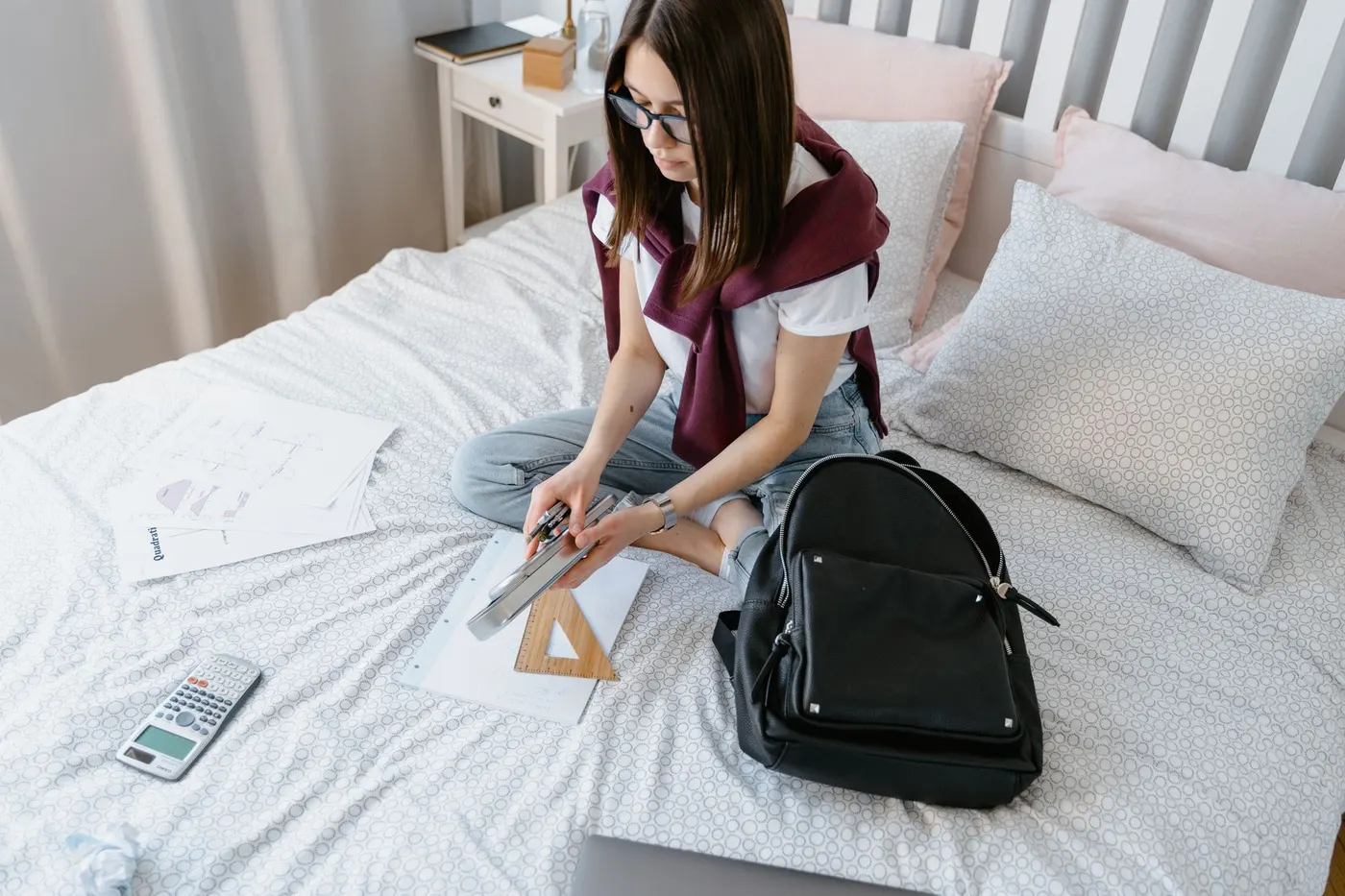
Any student can feel test anxiety. But some teens are more likely to struggle with it.
Teens who are anxious in general. A large review of 76 studies with more than 53,000 students found that test anxiety was strongly linked to general anxiety and social anxiety, and also linked to low mood[2]. Test anxiety is often part of a bigger anxiety picture.
Perfectionists. Teens who believe any mistake is a disaster often feel exams as a test of their worth, not just their knowledge. Our article on perfectionism in children and teens explains this pattern.
Teens with ADHD or a learning disability. Timed tests are harder when reading, writing, attention, or processing speed is a challenge. After years of feeling behind, many of these teens start to dread tests. If your teen is bright but tests never seem to reflect it, our article on signs of neurodivergence in smart kids may help, and so can our article on signs of ADHD in girls, since it is often missed in high-achieving girls.
Teens with low confidence in their abilities. The same review found that test anxiety went hand in hand with lower academic self-confidence[2]. It becomes a cycle: anxiety lowers marks, and lower marks make the next test feel even scarier.
Teens who freeze under pressure in other places too. If your teen freezes in games, recitals, or tryouts as well as tests, read about performance anxiety in teen athletes.
Test anxiety does affect marks. In the review above, students with higher test anxiety tended to have lower marks in math, literacy, and school overall[2]. The link is modest, but it adds up over a school career, and it means anxious students' marks often undersell what they know.
If your teen seems more stressed about exams than usual this year, there's a reason. Ontario changed how high school students are evaluated starting in the 2026-27 school year.
Most Grade 9 to 12 courses now require a written final exam held during the school's exam period[3]. The exam counts for 20% of the final mark in Grades 9 and 10, and 25% in Grades 11 and 12[3][4]. Some courses, like co-op and certain open and workplace courses, use a different kind of final evaluation instead[4].
For Grade 9 math (MTH1W), the EQAO Grade 9 math assessment serves as the written exam and counts for 20% of the final mark[4].
Many Ontario high schools had moved away from traditional written exams in recent years. When the changes were announced, Education Minister Paul Calandra said, "I actually still thought exams were happening all over the place"[5]. That means a lot of teens in Grades 10 to 12 may be writing their first formal, timed final exam of high school this January. If that describes your teen, their nerves make sense.
Attendance and participation now make up 15% of the final mark in Grades 9 and 10, and 10% in Grades 11 and 12[3]. Excused absences, such as illness, are not supposed to lower a student's mark[3][4].
This matters for anxious teens. Missing class to avoid a test, or staying home the day before an exam to "study," can now cost marks on its own. If your teen has been skipping class because of anxiety, it's worth addressing now rather than in the middle of exam week.
For students in Grades 11 and 12, final marks feed into university and college applications. A 25% exam in a course that counts toward admission can feel enormous. We cover that pressure in more detail in our perfectionism article.
Most Ontario boards hold Semester 1 exams in the last week or two of January. Check your school's calendar for the exact dates, and try not to book trips or appointments during the exam period.
"One exam is part of your mark, not all of it. Most of your grade comes from the work you've already done this semester."
You can't write the exam for your teen. But you can lower the temperature at home and help them walk in with a plan.
Start the conversation early. Ask how they're feeling about exams, not just whether they're studying. "What part of exam week worries you most?" opens a door. "Are you studying?" usually closes it.
Help them break studying into small pieces. A huge, vague task ("study for chemistry") feeds anxiety. A small, clear one ("do 10 practice questions from unit 3") is easier to start. Help them map out the weeks before exams, then step back.
Practise under test-like conditions. Doing a practice test with a timer, at a desk, with no phone, makes the real thing feel more familiar. Familiar is less scary.
Protect sleep. Teens who pull all-nighters remember less and feel more anxious. A consistent bedtime in the weeks before exams helps more than one extra night of cramming.
Keep some normal life going. Sports, time with friends, and family dinners aren't a distraction from exams. They're what keeps stress manageable.
Try a 10-minute worry write. In a well-known study, highly anxious Grade 9 students who spent 10 minutes writing about their worries right before their first high school final exam did better than highly anxious students who didn't. Highly anxious students who wrote averaged a B+, while those who didn't averaged a B-[1][6]. Writing the worries down seems to free up mental space for the test. Your teen can do this the night before, the morning of, or in the hallway before they walk in.
Practise a slow breath. A long, slow exhale tells the body it's safe. Have your teen try breathing in for a count of four and out for a count of six, a few times, before and during the test. It works best if they practise it at home first, when they're calm.
Name the feeling differently. A racing heart doesn't mean they're going to fail. It means their body is getting ready. Saying "My body is revving up to help me" can make the feeling less frightening.
Eat something. Even if their stomach is in knots, a small breakfast helps with focus.
Have a plan for going blank. Many teens panic when their mind goes blank, which makes it worse. Help them make a simple plan in advance: take a slow breath, skip the question, do one they know, and come back later.
"It makes sense that you're nervous. This matters to you."
"You've done hard things before. You can do this one too."
"Whatever mark you get, I'm proud of how hard you've worked."
"If your mind goes blank, that's anxiety, not you. Breathe, skip it, and come back."
"One test doesn't decide your future."

Some teens need more than strategies at home. In Ontario, students can get support with tests and exams through the school.
Individual Education Plans (IEPs). An IEP is a written plan for a student who needs support at school. Ontario's IEP template includes a section for assessment accommodations, which are changes to how a student is tested, not what they're tested on[7]. Depending on the student's needs, these can include things like extra time, a quiet room, breaks, or having questions read aloud. Learn more about how IEPs work in Ontario and the difference between accommodations and modifications.
Talk to the school before exam week. If your teen has an IEP, make sure their accommodations apply to final exams this year, especially since many schools are running formal exams for the first time in a while. If your teen doesn't have an IEP but anxiety is affecting their tests, talk to the guidance counsellor or student services. Schools can sometimes put informal supports in place while you work toward a plan.
Ask what happens if your teen is sick on exam day. Each school has its own process for a missed exam. Knowing it in advance takes away one more "what if."
Consider an assessment if tests never match what they know. If your teen has always struggled with tests, an undiagnosed learning disability or ADHD may be part of the picture. A psychoeducational assessment can identify what's going on and give the school a clear road map for support. Young Sprouts offers learning disability assessments and ADHD assessments.

Many teens feel nervous before exams, and the strategies above are enough. For others, test anxiety has grown bigger than one exam season. Here's a simple way to think about what your teen needs.
If your teen seems down most of the time, not just at exam time, read our article on teen depression vs. normal teen behaviour.
If you're worried about your teen's safety right now, call or text 9-8-8 (Canada's Suicide Crisis Helpline, available 24/7) or call 9-1-1. Teens can also reach Kids Help Phone at 1-800-668-6868 or by texting CONNECT to 686868.
Test anxiety responds well to treatment, and teens don't need years of therapy to feel a difference. At Young Sprouts Therapy, we help teens understand their anxiety, build skills they can use in the exam room, and stop letting fear decide how they perform.
Cognitive behavioural therapy (CBT). CBT is the most studied treatment for anxiety in young people. A Cochrane review of 87 studies with nearly 6,000 children and teens found that CBT reduced anxiety more than waiting for treatment or no treatment[8]. Programs built specifically for test anxiety use the same tools. In one trial of a short, six-session CBT program for highly test-anxious secondary students, teens who took part had a meaningful drop in test anxiety, along with fewer symptoms of general anxiety and panic[9].
In sessions, your teen will learn to:
Mindfulness and acceptance-based approaches. Some teens do best learning to notice anxious thoughts without getting pulled into them. A 2024 review of 18 studies, mostly with older teens and young adults, found that mindfulness programs reduced test anxiety[10]. Our therapists also use acceptance and commitment therapy (ACT), which helps teens act on what matters to them even when anxiety shows up.
Practising with peers. Hearing other teens describe the same racing heart and blank mind can be a huge relief. Our group therapy programs for teens (ages 13 to 17) give them a safe place to build skills together. When a group isn't running, you can join the waitlist.
Support for parents. It's hard to know when to push and when to back off. Parent coaching gives you a clear plan for exam season and beyond.

We offer therapy for teens and children at our Thornhill office and online across Ontario. Learn more about our anxiety therapy. If your teen doesn't think they need help, our article on what to do when your teen refuses therapy can help.
Common signs include stomach aches, headaches, or nausea before tests, trouble sleeping the night before, going blank on questions they knew, and doing much worse on tests than their studying would suggest. Many teens also procrastinate, over-study, ask for constant reassurance, or try to stay home on test days.
Test anxiety isn't a separate diagnosis on its own. It's a type of performance anxiety. For some teens it's a stand-alone struggle, and for others it's part of a broader anxiety disorder, such as generalized anxiety or social anxiety. Either way, it's real, common, and treatable.
When anxiety is high, worry thoughts compete for the same working memory your teen needs to recall information and solve problems. That leaves less room for the test itself. Going blank is a sign of anxiety, not a sign that your teen didn't study.
Starting in the 2026-27 school year, most Grade 9 to 12 courses in Ontario require a written final exam, worth 20% of the final mark in Grades 9 and 10 and 25% in Grades 11 and 12. Attendance and participation now count for 15% of the final mark in Grades 9 and 10 and 10% in Grades 11 and 12. Excused absences, such as illness, should not lower a student's mark.
Yes, if it's part of their Individual Education Plan (IEP). Ontario IEPs include assessment accommodations, which can cover things like extra time, a separate room, or breaks. If your teen doesn't have an IEP, talk to the school's guidance counsellor or student services team about what supports are possible.
In most cases, no. Avoiding a test brings relief in the moment but usually makes anxiety stronger next time, and under Ontario's new rules, unexcused absences can affect marks. If your teen is truly sick, follow your school's process for missed exams. If anxiety is the reason, it's a good time to talk to a therapist.
Get a full night's sleep instead of cramming, spend 10 minutes writing down worries about the test, practise slow breathing, and make a simple plan for what to do if their mind goes blank. Research with Grade 9 students found that writing about test worries for 10 minutes before a final exam improved scores for anxious students.
Yes. Young Sprouts Therapy supports teens and families dealing with test anxiety and other forms of anxiety at our Thornhill office, serving families across Vaughan, Richmond Hill, Markham, and North York. We also offer online therapy across Ontario. Our team uses approaches like CBT and ACT, runs teen groups, offers parent coaching, and provides learning disability and ADHD assessments. Services are provided by Registered Psychotherapists and Registered Social Workers, which many extended health plans cover.
Teens with test anxiety are usually the ones who care the most. That's worth protecting. What they need from us is help believing that a racing heart and a blank moment don't mean they're failing, and that one exam doesn't decide who they are.
If exam season is taking a toll on your teen, or you're not sure whether what you're seeing is normal, we're here to help.
Book a free 15-minute consultation or learn more about therapy for teens and anxiety therapy in Vaughan and Thornhill.
This article is for general information only and is not a substitute for professional advice, diagnosis, or treatment. If you're worried about your teen's safety, call or text 9-8-8 or call 9-1-1.