Sensory Integration Occupational Therapy for Children with Autism: What the Evidence Really Says
By Young Sprouts Therapy
· 12 min read
Child Mental HealthSchool & LearningParentingAutismSensory ProcessingOccupational TherapyKidsVaughanOntario


By Young Sprouts Therapy
Parents often hear the term "sensory integration therapy" from other families, from school teams, or from a quick internet search. What they hear less often is an honest accounting of what the research actually supports, what it does not, and how a responsible occupational therapist uses these ideas in practice.
At Young Sprouts Therapy, our pediatric occupational therapists use sensory integration principles as one part of a broader, evidence-informed plan focused on your child's real-life participation. This article walks through what sensory processing challenges look like in autism, what sensory integration therapy actually is, what the peer-reviewed evidence says, and how we approach it here.
| Sensory differences are real | Sensory processing challenges are common in autism and affect daily routines. They are nervous system differences, not behaviour problems. |
| Two different things get called "sensory therapy" | Ayres Sensory Integration is a structured, clinic-based intervention. Sensory tools like weighted vests are single strategies. The evidence treats them very differently. |
| The evidence is promising but limited | Well-structured sensory integration therapy shows gains on individualized functional goals, but studies are small and it is not a stand-alone treatment for autism. |
| Function is the goal | Responsible OT targets real routines like dressing, meals, and school participation, with caregivers involved from the start. |
Sensory processing is how the nervous system receives information from the world and the body, organizes it, and produces a response. Most of us do this automatically. We tune out the hum of the refrigerator, adjust to a scratchy tag, and notice a car horn without being overwhelmed by it.
For many autistic children, this filtering and organizing works differently. Common patterns include:
These patterns are not behaviour problems, though they often produce what looks like one. A meltdown in a grocery store is frequently a nervous system that has run out of capacity, and there are things you can try in the moment using sound and music. Avoidance of hair washing is often a genuine aversive experience, not defiance. Over time, these challenges can lead to withdrawal from self-care routines, difficulty participating in classroom activities, and fewer opportunities for social play, which compounds the isolation.
Research consistently documents co-occurring sensory processing problems in children with autism spectrum disorders, and a growing body of work examines interventions targeting sensory challenges in children with ASD. Understanding which pattern your child shows, and in which environments, is the starting point for any useful plan.
Here is where precision matters, because two very different things get called "sensory therapy."
Ayres Sensory Integration (ASI) is a specific clinic-based intervention developed by occupational therapist A. Jean Ayres. It involves sensory integration therapy using child-directed, sensory-rich activities in a specially equipped space, typically with suspended equipment, climbing structures, crash pads, and tactile materials. The therapist follows the child's lead while grading the challenge, with the goal of improving the child's adaptive responses to sensory experiences. Fidelity to a defined protocol is part of what makes it ASI rather than simply "play in a sensory gym."
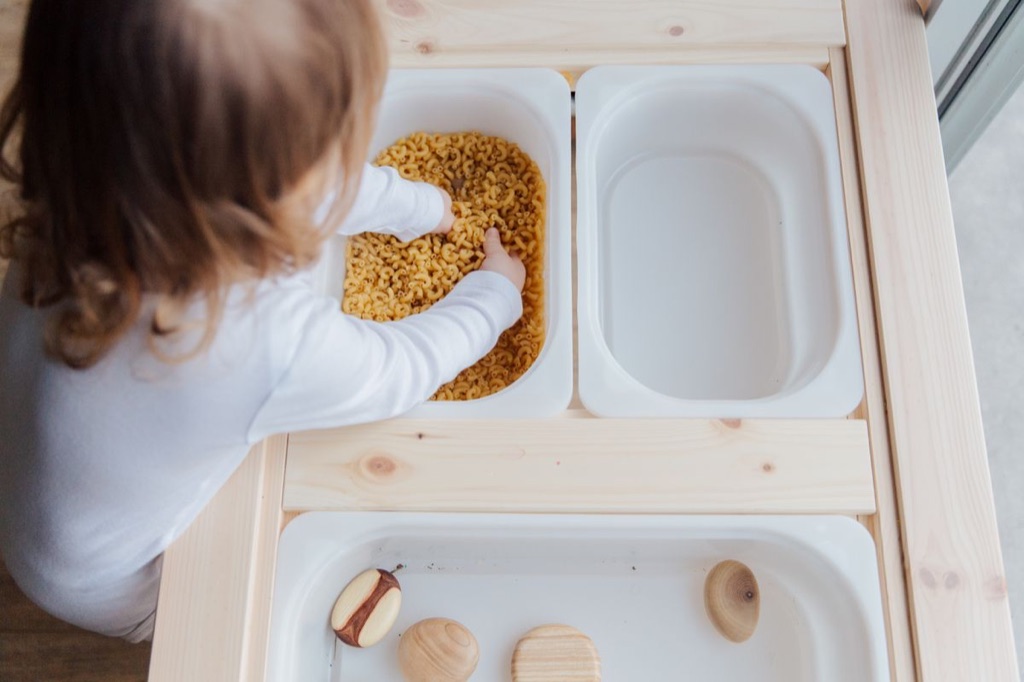
Sensory-based interventions are something else. These are typically single-modality strategies applied to a child, often in a classroom: weighted vests and therapy balls, brushing protocols, fidget tools, or auditory programs. They are usually adult-directed, brief, and aimed at producing a short-term change in arousal or attention.
Both get lumped together in conversation. They should not be lumped together in the evidence, because they perform quite differently in the research.
This is the section most articles skip or soften. We would rather give you the real picture.
A systematic review of sensory processing interventions for children with autism spectrum disorders covering studies from 2000 to 2012 examined 19 studies, of which 5 tested Ayres Sensory Integration and 14 tested sensory-based interventions. The ASI studies showed some encouraging findings: sensory integration therapy improved child performance on individualized functional goals, measured through Goal Attainment Scaling, along with reductions in some behaviours linked to sensory difficulties.
An important pattern emerged. Studies using well-defined, manualized ASI protocols produced more promising results than studies using loosely structured sensory activities. Structure and fidelity appeared to matter.
The significant caveat: sample sizes were small. These were not large trials.
A comparative effectiveness review of interventions targeting sensory challenges in children with autism spectrum disorder looked across intervention types. It found that interventions targeting sensory challenges may produce modest short-term improvements in sensory-related outcomes, with the strongest signal for sensory integration-based approaches. Some evidence suggested sensory integration-based approaches improved sensory and motor skills compared with usual care.
Single-modality sensory strategies fared less well. Weighted blankets, auditory integration training, and certain tactile programs showed inconsistent or minimal benefits. Massage and environmental enrichment showed some positive findings, though the quality and consistency of that evidence was limited.
Now the part that requires intellectual honesty.
A separate review, sensory integration therapy for autism spectrum disorders: a systematic review, examined 25 studies and reached largely non-supportive conclusions. Its central argument was methodological: small samples, inconsistent protocols, variable outcome measures, and weak controls mean the field cannot yet claim strong, durable effects. The review concluded that the evidence base does not currently support sensory integration therapy as a stand-alone, research-backed treatment for autism in educational settings.
A more recent systematic review of Ayres Sensory Integration intervention for children with autism, which applied Council for Exceptional Children evidence standards, was more favourable toward well-defined ASI specifically, while still underscoring that methodological weaknesses limit the strength of current sensory integration evidence and that higher-quality trials with fidelity measures are needed.
What this means for your family, in plain terms: there is real, if preliminary, evidence that well-structured ASI can help children reach individualized functional goals. There is not evidence that it is a cure, that it remediates core autism characteristics, or that sensory tools used alone reliably change much. Anyone telling you otherwise is ahead of the data.
Our position follows from the evidence above.
We use sensory integration principles inside a broader, occupation-focused occupational therapy plan. We do not present sensory integration as a stand-alone treatment for autism, because the research does not support that framing.
What we do align with is the pattern the research keeps pointing toward: occupation-focused pediatric OT interventions that target daily living, play, and school participation show effectiveness in pediatric populations, and manualized sensory integration protocols linked to functional goals outperform unstructured sensory activity.
In practice, that means:
Evaluation comes first. We begin with a caregiver interview, because your observations across contexts are data we cannot get any other way. We add structured observation of play, analysis of sensory processing patterns, and standardized assessments where they add value. We are looking for the relationship between sensory patterns and participation, not a score for its own sake.

Treatment sessions may include clinic-based sensory integration sessions using child-directed, sensory-rich activities: suspended swings, dynamic movement and climbing, deep pressure input, tactile play, and sensorimotor games. What holds it together is that these are graded challenges embedded in child-directed play, with clear safety and regulation goals, rather than a checklist of activities.
Two things matter throughout. Co-regulation: the therapist actively supports the child's regulation rather than expecting the child to manage alone. Graded challenge: activities sit at the edge of what the child can do, which is where adaptation happens.
We also build in occupation- and activity-based pediatric OT interventions that integrate sensory strategies into meaningful tasks, so the work connects to real routines. And we spend time with caregivers on carryover, because an hour a week in a clinic does not change a life. What you do at home does.
The measure of success is not what happens in our clinic. It is whether your child can tolerate getting dressed, move between activities without falling apart, sit through a classroom lesson, and stay in a game with peers.

Getting there usually involves more than direct therapy:
This reflects a holistic occupational therapy approach considering the interplay of child, environment, and occupation. Often the most effective change is not to the child at all. It is to the environment around them.
Partly, and it depends on what you mean. Small randomized controlled trials of sensory integration therapy in autism using well-defined Ayres Sensory Integration protocols have shown functional gains on individualized goals. But the overall evidence base is mixed and methodologically limited, with small samples and inconsistent protocols. Our view: sensory integration should be used within a broader, evidence-informed OT plan with clear functional goals, not offered as a stand-alone treatment.
Most studies examine short-term outcomes, typically six months or less, and report modest short-term improvements in sensory and motor outcomes. Data on long-term durability is limited. In practice, families often notice changes in specific targeted routines before broader changes, which is one reason we set narrow, measurable goals rather than vague ones.
Ayres Sensory Integration is a comprehensive, child-directed, clinic-based intervention delivered by a trained therapist following a defined protocol. Sensory tools, such as weighted vests, fidgets, or ball chairs, are single-modality strategies. In the research, single tools used on their own rarely show strong effects. That does not mean a tool never helps your particular child, but it does mean a tool is not a therapy plan.
No. Autism is not something occupational therapy treats or removes. What OT can address is participation: helping your child engage more comfortably in the activities that matter to them and to your family.
An occupational therapy evaluation may be worth considering if your child shows:
Young Sprouts Therapy provides sensory integration occupational therapy for children with autism in Thornhill, Vaughan, and across the Greater Toronto Area, with virtual consultation available throughout Ontario. Ontario families exploring autism funding options can also read our guide to using OAP funding for therapy.
If you recognize your child in this article, a pediatric OT evaluation is a reasonable next step. We will look at your child's sensory patterns, how those patterns affect participation at home and school, and what would actually help. We will also be straightforward with you about what the evidence supports and what it does not.
Book a pediatric occupational therapy evaluation with Young Sprouts Therapy. We'll map your child's sensory patterns to real-life routines and tell you plainly what the evidence supports — in person in Thornhill/Vaughan or virtually across Ontario.
Book a Free Consultation →Learn more about our occupational therapy services, or read more about our team and approach.
This article is for general information and is not a substitute for personalized medical or mental health advice. It does not diagnose any condition, and sensory processing patterns can only be assessed by a qualified professional. If your child may be in immediate danger, call or text 9-8-8 or call 911.