Rejection Sensitive Dysphoria in Children: Signs, Scripts, and When to Get Help
By Young Sprouts Therapy
· 10 min read


By Young Sprouts Therapy
RSD describes an intense, almost physical wave of emotional pain triggered by criticism, rejection, or the feeling of falling short — even when no rejection actually happened. It shows up most often in children with ADHD and other forms of neurodivergence, and it is one of the most misunderstood patterns we see at Young Sprouts Therapy in Thornhill.
This guide walks you through what rejection sensitive dysphoria in children looks like, how to tell it apart from ordinary sensitivity or anxiety, and — most importantly — exactly what to say in the moment.
A note before we begin: this article is educational and isn't a diagnosis. If what you read here sounds like your child, the next step is a conversation with a qualified professional — not a label.
| RSD is real, but informal | Rejection sensitive dysphoria is a widely recognized clinical pattern — intense emotional pain after perceived rejection or criticism — but it is not a formal diagnosis in the DSM-5-TR. |
| It travels with ADHD | RSD is strongly linked to ADHD and the emotional dysregulation that often comes with it. |
| The tell is what your child believes afterward | Ordinary sensitivity says "that hurt." RSD says "I'm bad" — the pain goes straight to self-worth. |
| It responds well to support | Calm co-regulation in the moment, skill-building afterward, and therapy when the pattern starts costing your child confidence, friendships, or school comfort. |
"Dysphoria" comes from a Greek word meaning hard to bear — and that's the most accurate way to understand RSD. It isn't a child being dramatic. It's a nervous system that registers criticism, correction, teasing, or perceived failure as genuine, urgent pain.
The term was popularized by American psychiatrist Dr. William Dodson, whose writing for ADDitude Magazine brought the concept to millions of ADHD families. Two important facts sit side by side here:
In other words: the label is informal, but the experience is very real — and naming it often brings parents enormous relief.
"As Vaughan child therapists, we often remind parents that a child with RSD isn't overreacting — their brain is registering criticism as genuine danger. Once you understand that, everything about how you respond changes." — a member of the Young Sprouts clinical team
The spelling test. Imagine your 8-year-old gets 18/20 on a spelling test and bursts into tears at pickup. To them, the two wrong answers aren't a detail — they're proof of failure. No amount of "but you did so well!" lands.
The neutral comment. You say, "Let's put your shoes by the door next time," in a completely even voice. Your 10-year-old explodes — "Why are you always mad at me?!" — and slams their bedroom door. A simple reminder was received as an attack.
The playground moment. Your daughter's best friend partners with someone else at recess. By bedtime, it has become "I have no friends," "nobody likes me," and tears that last an hour. One ordinary social moment triggered a landslide.
Notice the pattern in all three: the trigger is small or even imagined, but the pain is enormous — and it goes straight to the child's sense of worth.
Every child is different, but at Young Sprouts we tend to see clusters like these:
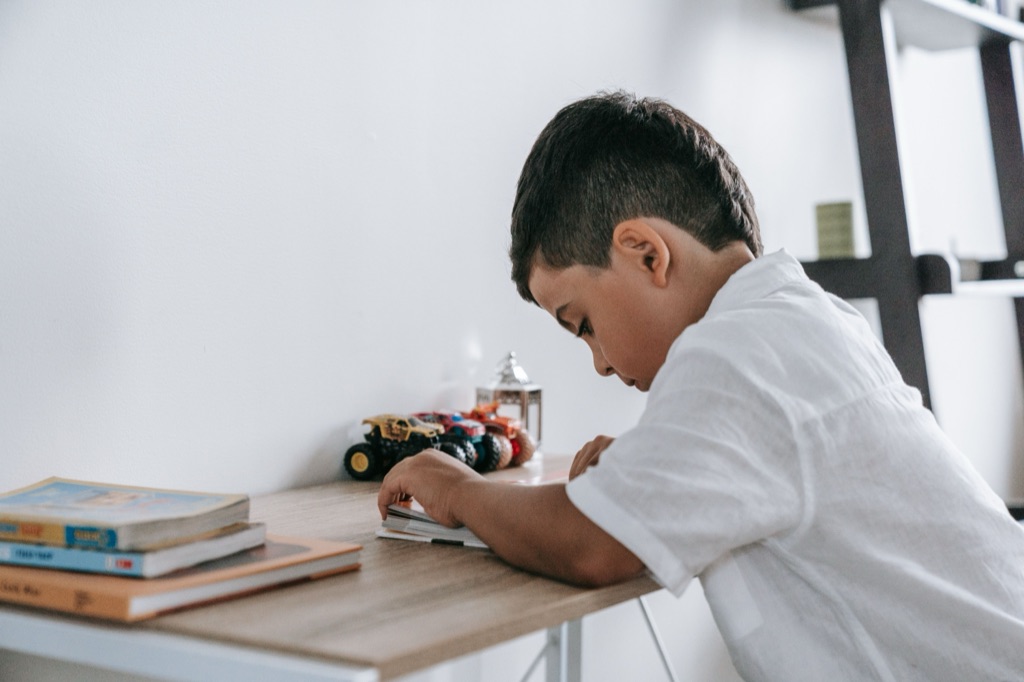
Some children with RSD don't explode at all — they go silent and disappear into themselves. If that sounds familiar, our guide to children who withdraw instead of melting down pairs well with this one.
This is the question parents ask us most, so let's answer it honestly: sensitivity is a temperament, not a problem. The distinction lies in intensity, duration, and what your child concludes about themselves.
| Pattern | Typical trigger | Intensity & duration | What's usually underneath |
|---|---|---|---|
| Typical sensitivity | Real disappointments — losing a game, a genuine conflict | Proportionate; recovers with comfort, usually within the hour | Big feelings, felt deeply — then processed |
| Anxiety | Anticipated threat — tests, new situations, "what ifs" | Builds before the event; worry, avoidance, stomach aches | Fear of what might happen |
| ADHD emotional dysregulation | Frustration, transitions, boredom, overstimulation | Fast spike, fast fade; child often moves on before you do | A brain that struggles to put brakes on any strong emotion |
| ODD-style defiance | Demands and limits — "no," "not now," "do this" | Persistent pushback across months, most settings | A stuck power struggle; often unmet needs beneath it |
| RSD | Criticism, correction, exclusion — real or perceived | Instant, extreme ("emotional sunburn"); slow recovery; out of proportion to the trigger | Pain wired to self-worth: "I am bad / unlovable / a failure" |
These patterns overlap — a child can be anxious and have RSD, and refusal can hide fear rather than defiance. If your child's "no" seems to come from worry, our post on when an anxious child refuses everything unpacks that trap.
The single most useful question: after the storm, what does your child believe about themselves? "That hurt my feelings" suggests sensitivity. "I'm the worst kid in the world" suggests RSD.
At this age RSD looks like huge, fast meltdowns over correction, losing games, or a playmate saying "you can't play." You may also see it somatically — stomach aches before activities where they might fail. Young children can't yet say "my worth feels attacked," so their bodies say it for them.
This is when the self-story hardens. Expect perfectionism, quitting hobbies after one hard session, secretly comparing themselves to classmates, and sentences that start with "I always" and "I never." Marks and team selections take on outsized meaning.
Social rejection becomes the main stage. Group chats, being left off an invite list, a friend's dry reply — each can trigger hours of rumination. Some teens armour up with avoidance or anger; others quietly stop trying at school so no one can say they failed. Girls in particular may mask the struggle — the presentation can echo how ADHD can look different in girls.
There's no validated "RSD test for a child" — anyone offering one online is overpromising. But this reflection captures the pattern parents describe to us. Check any that sound familiar:
If you checked 2 or more, it may be worth talking to a child therapist — not because something is "wrong" with your child, but because this pattern responds really well to the right support.
ADHD isn't just about attention. The same brain differences that make focus effortful also make emotional braking effortful — feelings arrive at full volume with no dimmer switch. When the feeling in question is rejection, the result is RSD.
There's a second ingredient: lived experience. Children with ADHD hear more daily correction than their peers — sit down, hand it in, stop interrupting, try harder. Year after year, those micro-messages compound. The child starts scanning for the next correction before it comes, and a negative feedback loop forms: more sensitivity, bigger reactions, more correction, more sensitivity.
That's why RSD isn't a character flaw or a parenting failure. It's an understandable outcome of a fast-feeling brain meeting a world that corrects it constantly. Can a child have RSD-style sensitivity without ADHD? Yes — we see it in anxious and autistic children too, and in some kids with no diagnosis at all. But if RSD is on your radar, ADHD is worth screening for.
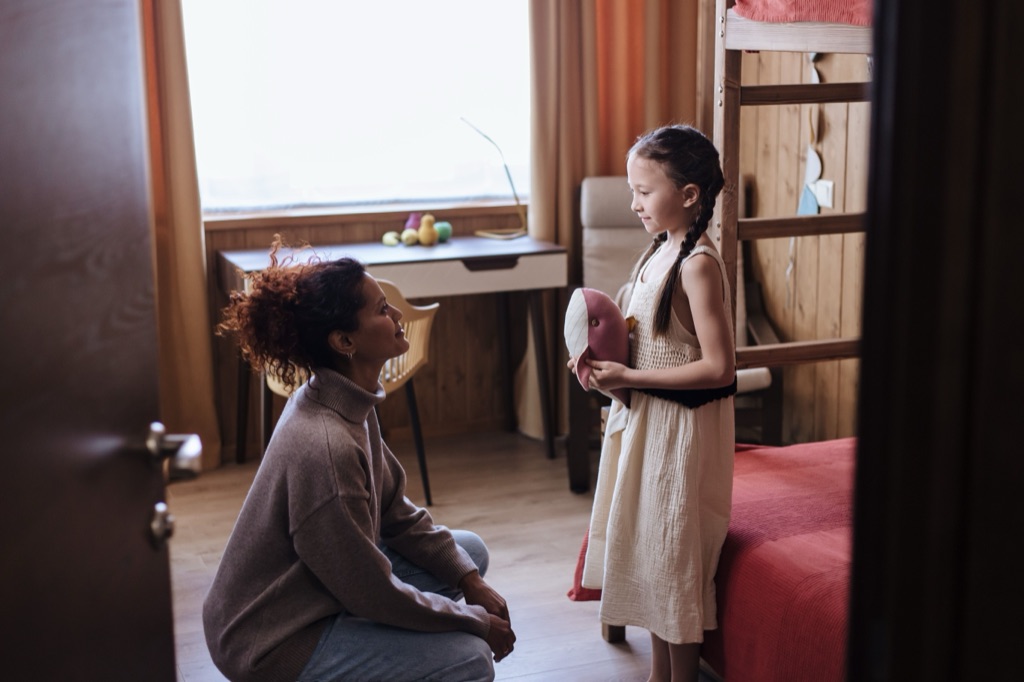
Here's the golden rule: in the heat of the moment, your child cannot hear logic — they can only hear safety. Reasoning comes later.
| Instead of… | Try… |
|---|---|
| "You're overreacting." | "That felt really big. I'm right here." |
| "It's not a big deal." | "It's a big deal to you right now. I get it." |
| "I wasn't even criticizing you!" | "Something I said landed hard. I'm not upset with you." |
| "Calm down." | "I'm going to sit with you until this wave passes." |
| "Why are you crying about this?" | "You don't have to explain it. I'm staying." |
Keep your voice low, your sentences short, and your body calm — your regulation is the raft they climb onto. This is co-regulation, and it does more in five silent minutes than any lecture.
"That wave hit hard.
You're not in trouble.
I'm staying right here with you until it passes."
Say it once, quietly. Then follow through — no questions, no fixing, no filling the silence. You're showing your child that a hard moment doesn't cost them your warmth.
The real work happens between storms, when everyone's nervous system is quiet.
Practise feedback in low-stakes moments. Offer tiny, warm corrections during play — then name the win: "I told you the tower was leaning and you fixed it. That's you handling feedback."
Build a feelings vocabulary. A child who can say "I feel embarrassed and it's a 7 out of 10" is already regulating. Emotion words are brakes.
Install a "compassionate coach" inner voice. Ask: "If your best friend missed two spelling words, what would you say to them?" Then: "Try saying that to yourself." Self-compassion is the direct antidote to RSD's self-attack.
Praise process, not perfection. "You kept going when it got frustrating" builds a self-worth that doesn't collapse when results wobble.
Partner with the school. A quick note to your child's YRDSB teacher — "she takes public correction hard; private feedback works better" — can transform a school year. Most teachers are grateful for the roadmap.
Rest assured — RSD is not a reflection of your parenting. The fact that your child falls apart with you usually means you're their safest person. That's not failure. That's trust.
Because RSD isn't a formal diagnosis, therapy doesn't "treat RSD" — it treats what drives it, and it works. At Young Sprouts, that usually means:
If you're curious what this looks like session to session, our overview of child therapy techniques walks through the approaches we draw on, and our child therapy page explains how we match them to your child. For children who also have attention and focus struggles, our ADHD therapy integrates the emotional side that's too often left out. Questions about medication belong with your child's physician or paediatrician — often alongside therapy.
Many children mellow with maturity and the strategies above. But reach out sooner rather than later if you're seeing:
For families across Thornhill, Vaughan, Maple, Richmond Hill, and the rest of York Region, support is close by: our clinic sits on Centre Street in Thornhill, and we offer virtual sessions across Ontario when in-person doesn't fit your week.
No — RSD does not appear in the DSM-5-TR, so it can't be formally diagnosed. It's a clinical description of a real, well-recognized pattern of intense rejection-triggered emotional pain, most often discussed in connection with ADHD. A therapist can assess what's driving the pattern and treat it, even without an official label.
Yes. The pattern is most common and most studied in ADHD, but we also see intense rejection sensitivity in anxious children, autistic children, and some children with no diagnosis at all. If RSD-like reactions are showing up, an ADHD screen is sensible — but not a foregone conclusion.
The intensity often softens as the brain's regulation systems mature, especially with supportive parenting. What doesn't fade on its own is the self-story — a child who concludes "I'm unlovable" at 8 can carry that into adolescence. Early skills and support protect against that.
No. High sensitivity is a temperament — feeling things deeply, including joy and beauty — and it comes with proportionate recovery. RSD is narrower and sharper: sudden, extreme pain specifically around rejection and criticism, with harsh conclusions about self-worth attached.
Through what drives it: therapy builds emotional-regulation skills, challenges the distorted thoughts ("everyone hates me"), strengthens self-compassion, and coaches parents on in-the-moment responses. Where ADHD is present, treating the ADHD itself often reduces the emotional reactivity; medication questions belong with your child's physician.
Absolutely — and it's missed more often in girls, because many mask it. Instead of explosions you may see perfectionism, people-pleasing, quiet withdrawal, and after-school meltdowns that teachers never witness. This mirrors the way ADHD itself is underidentified in girls.
Book a free 15-minute consult with a Young Sprouts child therapist. We'll listen to what's happening, tell you honestly whether therapy makes sense, and map out a next step that fits your family — in person in Thornhill or virtually across Ontario.
Book a Free Consultation →"The children we see with rejection sensitive dysphoria are so often the most tender-hearted kids in the room. Our job isn't to toughen them up — it's to help them carry a big heart without being crushed by it." — a member of the Young Sprouts clinical team
This article is for general information and is not a substitute for personalized medical or mental health advice. RSD is a clinical description, not a formal diagnosis — if you're concerned about your child, please reach out to a qualified professional. If your child may be in immediate danger, call or text 9-8-8 or call 911.