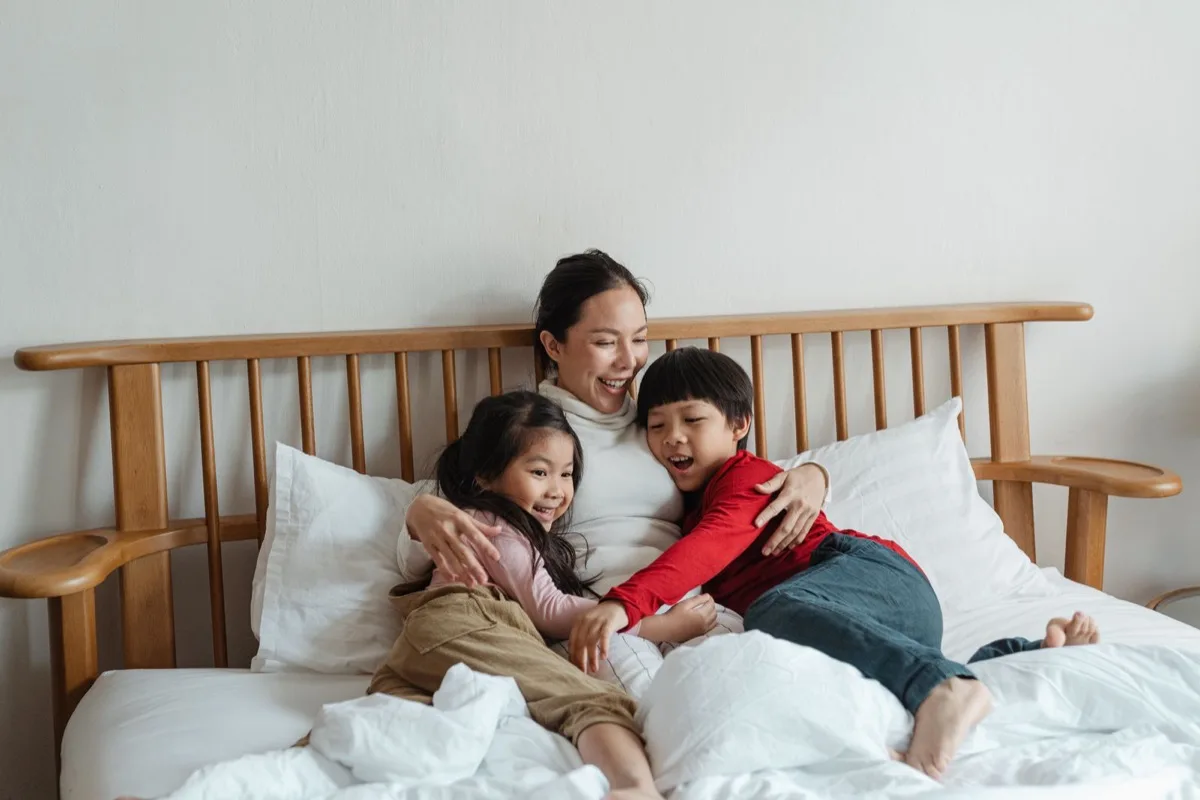
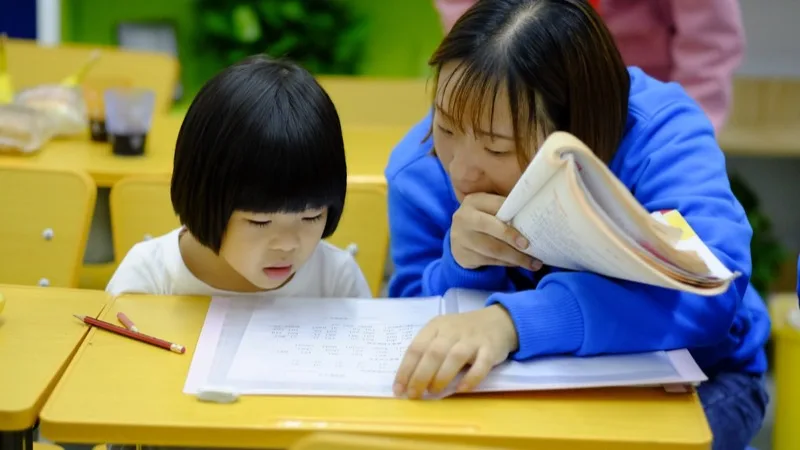
It's 4:15pm. Your seven-year-old is on the kitchen floor, crying, because their sock feels wrong. Twenty minutes ago you picked them up from school. The teacher said they had a great day. Cooperative. Followed instructions. No issues at all.
Then the report card arrives, and next to Self-Regulation, there's an N.
You're not imagining the gap. A child can hold it together for six hours in a classroom, then fall apart the moment they feel safe enough to stop. Both things can be true at once. Understanding why is the key to reading that letter the right way.
We are a child and family therapy clinic in Thornhill. Self-regulation is one of the things we work on most. When a parent brings us a report card with a low Self-Regulation rating, we're not looking at a mystery. We're looking at a name for something we see every week, described from one angle: the classroom.
Here's what that rating tends to mean, what it doesn't mean, and what's worth watching for.
What self-regulation actually is
Self-regulation is the ability to notice a big feeling and manage it, instead of being run by it. It's the gap between "I'm frustrated" and slamming a pencil down. Between "this is scary" and staying in the room anyway. Between wanting something right now and being able to wait.
It's also one of the slowest skills kids grow. The part of the brain that helps most with this, the prefrontal cortex, keeps maturing into a person's mid-twenties. A six-year-old who cannot self-regulate as well as a ten-year-old is not behind. That is simply what six looks like next to ten.
This matters because Self-Regulation is one of six learning skills every Ontario report card has to rate. The others are Responsibility, Organization, Independent Work, Collaboration, and Initiative. Teachers use a scale of E, G, S, or N. Under the province's Growing Success policy, learning skills are scored separately from a child's marks. The fall Progress Report Card puts extra weight on this section. So an N in Self-Regulation is not a grade. It's a teacher's snapshot of one skill, in one setting, at one point in the year.
What the teacher was actually watching
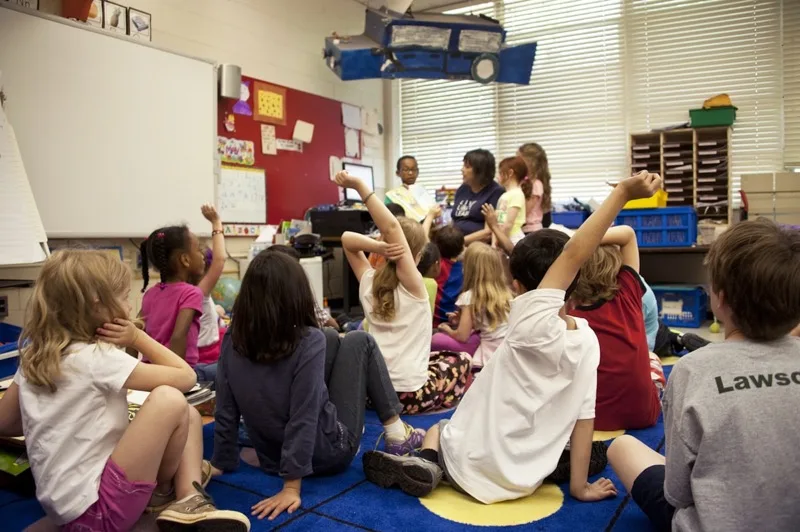
When a teacher rates Self-Regulation, they're usually watching a few kinds of moments: how your child handles frustration when something is hard, how they react when a plan changes without warning, whether they can pause before they act, and whether they can ask for help instead of shutting down or blowing up.
An N usually means the teacher saw one or more of those moments go sideways more often than expected for the grade. It does not tell you why. That's the part only you and your child's fuller picture can fill in. It's also the part most report cards, and most articles about them, skip.
Why school and home can tell two different stories
This is the piece that confuses parents most. The research backs it up clearly.
Managing emotion all day takes real effort, the same way physical effort does. For a child prone to anxiety or overwhelm, a school day can mean holding everything together through instructions, transitions, peer conflict, and noise. Hour after hour, with little room to let anything out. Some children manage that fairly well at school and have nothing left by pickup. We've written more about that pattern, often called shutting down instead of melting down, because it's easy to miss from the outside.
The reverse also happens. And it's even more important for reading a report card the right way. Teachers are not always able to see the inner state behind a child's behaviour. In a study of 750 school-aged children with elevated anxiety and depression, researchers found that teachers consistently rated children's internalizing symptoms lower than the children rated themselves. More notably, the children's own reported anxiety showed no clear link to how the teacher rated their school functioning. A child can be anxious, cooperative, and quiet, and be read by a busy classroom as simply well-regulated.
So a good rating does not rule anxiety out. And a poor rating does not always mean what it looks like from the outside. Self-regulation is hard to observe well in a room with twenty-five other children. That's why an N deserves a closer look, not panic or dismissal.
What a low Self-Regulation rating can be signalling
None of the following is a diagnosis. Most low ratings turn out to be ordinary and short-lived. But when a pattern lasts across more than one reporting period, these are the possibilities worth thinking through.
Anxiety. Worry that looks like rigidity, a big reaction to small changes, or tears that seem too big for what triggered them. Anxious children often manage fine when things go according to plan, and struggle hard the moment something doesn't. If this sounds familiar, our page on anxiety therapy for children covers how this tends to show up and what helps.
ADHD or executive function differences. Trouble pausing between an impulse and an action, or trouble recovering once frustration hits. In a study of clinic-referred children with ADHD, researchers found that girls in particular showed elevated inattention on both parent and teacher rating scales, often in a form quiet enough to be missed. We work with families navigating this on our ADHD support page.
Sensory overwhelm. A child who seems completely fine and then is suddenly, intensely not. Noise, texture, and unpredictability can drain self-regulation faster than it looks like from outside.
An underlying learning difficulty. Frustration that shows up during certain tasks, like writing or math, and nowhere else, is sometimes a learning problem wearing a regulation costume.
Age, plain and simple. This is still the most common explanation by a wide margin. Self-regulation grows unevenly, in fits and starts. A child rated N in Grade 1 is very often rated G by Grade 4, without anyone doing anything beyond ordinary growing up.
The most useful question isn't "is my child dysregulated." It's "dysregulated in response to what." A teacher can usually tell you whether the difficulty shows up mainly during transitions, during unstructured time like recess, or during specific academic tasks. That detail matters far more than the letter on the report card.
What actually helps
Whatever the cause, a handful of things reliably support a child's self-regulation, at home and at school:
Name the feeling before you try to fix it. "You're really frustrated that this isn't working" lands before any solution does. Children can't use a plan while their nervous system is still fired up.
Make transitions predictable. Warnings before a change, not the change itself, are usually where the difficulty lives. A five-minute heads-up before switching activities does real work.
Give a recovery window after school. If your child is holding it together all day, don't start homework in the first twenty minutes after pickup. Food, quiet, and no demands come first.
Use co-regulation, not correction. A calm adult nearby is what teaches a dysregulated nervous system to settle. Consequences given mid-meltdown teach very little, because the part of the brain that learns from consequences is offline in that moment.
Name the pattern to your child's teacher. If home and school look different, that gap is useful information for both of you. It is not a contradiction you have to resolve.
Many parents find it easier to work through these strategies with support, rather than piecing them together alone. That is a large part of what our parent coaching sessions focus on.
When it's worth a clinical conversation
Most low Self-Regulation ratings ease on their own with time and ordinary support. These are the signals that it's worth talking to someone sooner, rather than waiting:
The rating has stayed low or dropped across two or more reporting periods.
It shows up with distress at home: morning resistance, stomach aches before school, changed sleep, or a child who is harder to reach than they used to be.
Your child has started describing themselves in absolute terms, like "I always mess everything up" or "I'm the bad one."
The gap between how hard your child is trying and what they're getting back for it keeps getting wider.
Regulation looks very different at home than at school, and the home version is a lot harder.
If any of that sounds familiar, it's worth a conversation. That conversation doesn't have to be with us. It might be your family doctor or the school's support team. If avoiding school itself has started to show up with the dysregulation, our piece on school refusal and school avoidance is worth a look too.
How this plays out in York Region
Growing Success applies across Ontario. Families in York Region District School Board and York Catholic District School Board schools use the same six learning skills and the same scale as every other publicly funded school in the province. What we notice locally is timing. November, right after the fall progress report cards go home, and again in February after Term 1, are reliably our busiest weeks for exactly this reason. If you're holding a report card and something about the Self-Regulation line isn't sitting right, that's an ordinary and common reason to reach out. It is not an overreaction.
Frequently asked questions
Does a low Self-Regulation rating mean my child has ADHD or anxiety?
No. It means a teacher saw difficulty managing frustration, transitions, or impulses more often than expected for the grade. That can reflect age, a hard term, anxiety, ADHD, sensory sensitivity, or a learning difficulty. The rating itself doesn't tell these apart. A pattern that lasts across terms is what makes a closer look worthwhile.
My child is fine at school but falls apart at home. Which one is real?
Both. Holding self-regulation together in a structured classroom all day takes real effort. Many children have very little left by the time they get home. The after-school version is not a performance, and it's not your parenting. It's often a sign your child feels safe enough with you to stop holding it together.
Can a low learning skills rating affect my child's actual grades?
Not directly. Ontario policy requires learning skills to be assessed separately from subject marks. Indirectly, a child who struggles to regulate frustration may avoid or rush through hard work, which can later show up in the grades.
Should I be worried about one N on one report card?
Usually not. A single low rating, especially a first one, is most often situational or developmental. It becomes more meaningful when it repeats across more than one reporting period, or shows up with real distress at home.
When should I bring this to a therapist instead of waiting it out?
When the pattern lasts, when it's paired with signs of distress like sleep changes or negative self-talk, or when you notice the gap between effort and outcome growing rather than shrinking. You don't need a diagnosis or a referral to start that conversation.
A last thought
Self-regulation is a skill your child is still building. It is not a fixed trait the report card is scoring them on. The letter beside it describes one term, in one room, through one adult's eyes. It's useful information. It just isn't the whole picture, and you have the rest of it.
If you're looking at a report card and want another perspective on what you're seeing, we're happy to talk it through. Young Sprouts Therapy offers child therapy and family therapy in person at our Thornhill clinic, and virtually across Ontario. Book a free 15-minute consultation and we'll help you figure out the next step, even if that step isn't therapy with us.
References
Ontario Ministry of Education. (2010). Growing Success: Assessment, Evaluation, and Reporting in Ontario Schools, First Edition, Covering Grades 1 to 12. Queen's Printer for Ontario. https://www.edu.gov.on.ca/eng/policyfunding/growsuccess.pdf
Pedersen, M. L., Holen, S., Lydersen, S., Martinsen, K., Neumer, S. P., Adolfsen, F., and Sund, A. M. (2019). School functioning and internalizing problems in young schoolchildren. BMC Psychology, 7, 88. https://link.springer.com/article/10.1186/s40359-019-0365-1
Written by the Young Sprouts Therapy team. Meet our team.
This article is for general information only. It is not a substitute for individual assessment, diagnosis or treatment. If you have concerns about your child's mental health, please speak with a qualified health professional.