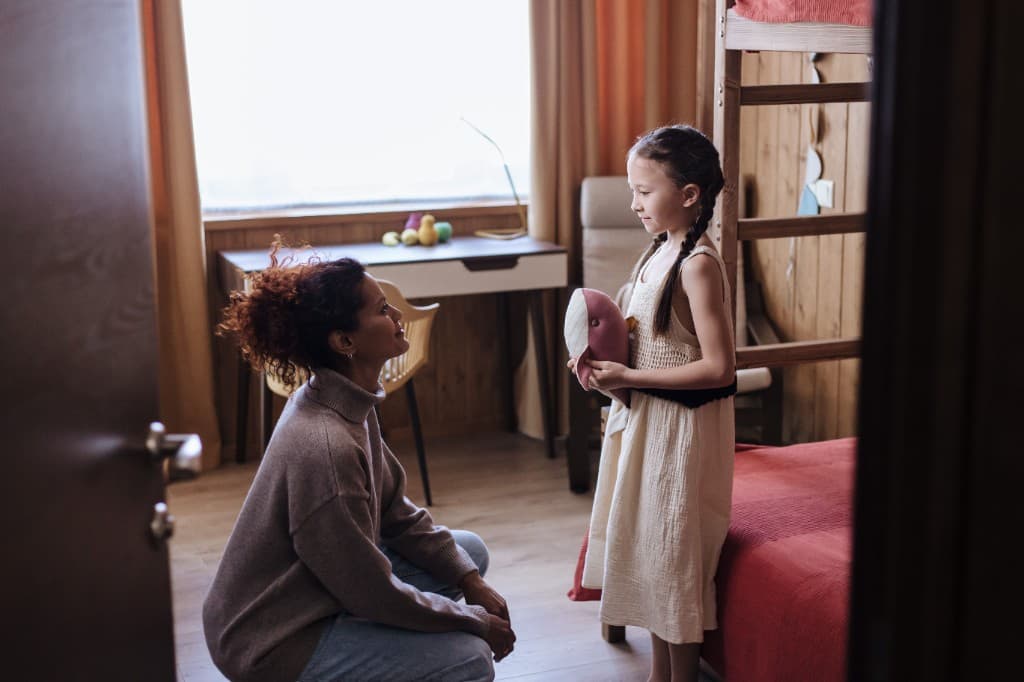
Imagine your 6-year-old refuses to enter the birthday party at a busy Vaughan community centre. Twenty minutes later, once the noise settles, she's the one comforting the kid who scraped his knee. Or picture the morning sock-seam battle that somehow ends in tears — not because your child is dramatic, but because the fabric feels unbearable.
At Young Sprouts, we often see families who wonder: Is something wrong? Often, what you're seeing is a highly sensitive child — a temperament found in roughly 1 in 5 kids, not a disorder.
A note before we begin: this article is educational and isn't a diagnosis. If what you read here sounds like your child, the next step is a conversation with a qualified professional — not a label.
Key Takeaways
Sensitivity is a temperament
High sensitivity (sometimes called sensory processing sensitivity) is an innate temperament, not a diagnosis and not a parenting failure.
It comes with real strengths
Sensitive kids often bring empathy, creativity, conscientiousness, and a rich inner world.
Parenting approach matters more
Warmth plus firm limits helps highly sensitive children thrive more than harsh discipline ever will.
Help exists locally
Families in Thornhill, Vaughan, Maple, and across York Region can get practical support when sensitivity starts to shrink a child's world.
What Is a Highly Sensitive Child?
A highly sensitive child (sometimes called an HSC or highly sensitive kid) processes the world more deeply than most children. Psychologist Dr. Elaine Aron popularized the concept and wrote The Highly Sensitive Child, describing a trait researchers call sensory processing sensitivity.
Peer-reviewed research suggests this trait shows up in roughly 15–30% of people, with early estimates often cited around 15–20% of children. Twin research also points to moderate heritability — meaning sensitivity tends to run in families, even when siblings look very different day to day. (See, for example, Greven and colleagues' review of sensory processing sensitivity in Neuroscience & Biobehavioral Reviews.)
In plain language, highly sensitive kids tend to:
Process experiences more deeply
Become overstimulated more easily
Show strong empathy and emotional responsiveness
Notice subtleties others miss — a tone of voice, a change in routine, a look across the room
Important: High sensitivity is not a diagnosis. It does not appear in the DSM-5-TR. It is a temperament — a way of being wired — that can look like anxiety, shyness, or "overreacting" when a child is overwhelmed, but it is not the same as a clinical disorder.
Rest assured — a highly sensitive child is not a broken child. Sensitivity is a temperament, not a flaw in your parenting.
"As a Vaughan-based child therapist, I often remind parents that a highly sensitive child isn't overreacting — their nervous system is genuinely taking in more of the world, and processing it more deeply." — a member of the Young Sprouts clinical team
Signs of a Highly Sensitive Child
Every emotionally sensitive child is unique, but parents in York Region often recognize a familiar pattern. Here are common signs of a highly sensitive child, grouped so you can scan what fits.
Sensory signs
Tags, sock seams, or certain fabrics feel intolerable
Strong reactions to smells, bright lights, or food textures
Needs quiet recovery after busy sensory days
Emotional signs
Big reactions to small moments — a gentle correction can bring tears
Deeply affected by criticism, disappointment, or conflict
Absorbs other people's moods (a stressed parent, a tense classroom)
Feels "too much" after movies, news, or stories with sadness
Cognitive signs
Asks deep, thoughtful questions beyond their years
Notices tiny changes — a rearranged room, a different teacher tone
Overthinks decisions ("Which snack? Which shirt?")
Shows perfectionism or harsh self-talk after small mistakes
Social signs
Needs warm-up time in groups before joining in
Overwhelmed at parties, playdates, or busy community events
Drained after full school days or back-to-back activities
Often labelled "shy" when they are simply slow to warm up
That last point matters. Many highly sensitive kids are warm, funny, and socially skilled once they feel safe. They may not be shy so much as careful — and they often shine once the room settles. For more on helping kids feel steadier with peers, see our guide to building social confidence.
Sensitive, Anxious, Sensory Difference, or RSD? How to Tell
Parents often Google highly sensitive child vs anxiety, highly sensitive child vs sensory processing disorder, or even is my child highly sensitive or autistic — and the internet rarely gives a clear answer. Overlap is common. The table below is a clarifying starting point, not a diagnostic tool.
Fear-based worry about threat, uncertainty, or separation
Nervous system differences in registering/organizing sensory input
Intense emotional pain tied to perceived criticism or rejection (often discussed alongside ADHD)
What it looks like day-to-day
Notices subtleties; big feelings; needs downtime; strong empathy
"What if" worries, avoidance, reassurance-seeking, body symptoms
Seeks or avoids specific sensations (noise, touch, movement, textures)
Sudden shame, rage, or collapse after feedback that seems minor
How the child recovers
Often settles with quiet, connection, predictability, and time
May need worry tools, gradual exposure, and consistent support
Improves when sensory needs are met (breaks, tools, environment tweaks)
Recovers when they feel accepted again; criticism can linger intensely
When to seek assessment
If sensitivity is shrinking their world or family life revolves around preventing upset
If worry is persistent, impairing, or driving avoidance
If sensory issues significantly disrupt school, eating, sleep, or daily functioning
If rejection pain is extreme, frequent, or linked with ADHD concerns
At Young Sprouts, we often remind parents: two things can be true at once. A child can be highly sensitive and anxious. A child can have sensory differences and a sensitive temperament. Some children also experience intense reactions to perceived rejection that look like rejection sensitive dysphoria in children.
Only a qualified professional can tease these patterns apart through careful assessment. Online quizzes and blog checklists — including the one below — are for reflection, not diagnosis. If your child's distress is intense, persistent, or getting in the way of school, friendships, or family life, reaching out for support is a strength, not a failure.
How High Sensitivity Shows Up at Different Ages
Early years (ages 3–6)
In the preschool years, sensitivity often shows up in the body first: clothing battles, food texture refusals, big tears after a firm "no," or clinging at drop-off. Imagine a Maple preschooler who melts down when the classroom gets loud — then later draws a careful picture for the friend who was crying. Young highly sensitive kids need predictable routines, soft landings after busy days, and adults who treat big feelings as information, not defiance.
School-age (ages 7–11)
School-age sensitive kids often hold it together in YRDSB classrooms all day — managing noise, social rules, and performance pressure — then release everything at home. If your child is an "angel at school" and a storm after pickup, you may be seeing after-school restraint collapse, not bad behaviour. This age also brings perfectionism, deep fairness concerns, and strong reactions to teacher feedback.
Tweens and teens (ages 12+)
Tweens and teens who are highly sensitive may feel peer dynamics intensely, overthink social media cues, or become exhausted by packed schedules. They may look "dramatic," withdrawn, or overly self-critical. What they often need is privacy to decompress, help naming feelings without shame, and adults who separate identity from behaviour ("That choice didn't work" vs. "You're impossible").
Quick Parent Self-Check
This is a reflection tool — not a highly sensitive child test and not a diagnosis. Check any that sound familiar:
My child is bothered by tags, seams, noise, smells, or food textures more than peers.
Gentle corrections can lead to tears, shame, or long recovery time.
My child notices small changes in people, rooms, or routines.
Busy parties or community events overwhelm them at first.
They need quiet time after school or activities to feel like themselves again.
They ask deep questions or seem to "feel everything."
They absorb other people's moods.
They are often called shy, but warm up once they feel safe.
They show strong empathy — comforting others, worrying about fairness.
Harsh discipline seems to crush them rather than teach them.
If you checked 3 or more, your child may be highly sensitive — and the strategies below will help.
The Strengths Nobody Talks About
Sensitivity gets a bad reputation when families are exhausted. But at Young Sprouts, we also see the other side every week.
Highly sensitive children often bring:
Empathy that helps them notice who is left out
Creativity and a rich inner world
Conscientiousness — they care deeply about doing things well
Awareness that can become wisdom with the right support
Researchers sometimes describe sensitive children as "orchid children": not fragile flowers doomed to struggle, but kids who are more affected by their environment in both directions. In harsh, chaotic, or highly critical settings, they may struggle more than average. In warm, predictable, supportive homes, they often thrive more than average.
That is hopeful news. Your child's sensitivity is not a defect to erase. It is a nervous system that takes in more — which means your calm, your limits, and your connection matter enormously.
How to Discipline a Highly Sensitive Child (Without Crushing Them)
Parenting a highly sensitive child does not mean walking on eggshells. It means leading with warmth plus firm limits.
Harsh discipline often backfires with HSCs because they internalize and amplify criticism. A raised voice, public shame, or "You're being ridiculous" can stick for hours — or days. The goal is still guidance and accountability. The method is connection first, correction second.
"That felt huge to you. Let's take a breath together, and then we'll fix it."
"Go to your room until you calm down."
"Let's find a quiet spot together. I'll stay nearby while your body settles."
"Why are you always so dramatic?"
"Your feelings are big right now. I'm here, and we can handle this."
"You're fine — just go join the party."
"We'll arrive early so you can settle in as the room fills. I'll stay for the first bit."
"If you can't behave, no more playdates."
"Playdates still matter. Next time we'll plan a shorter visit and a quiet break."
"You are a problem today."
"You made a mistake. Mistakes are fixable — let's repair it."
Connect before you correct. First regulate ("I'm with you"), then teach ("Hitting isn't okay"), then repair ("How can we make this right?"). Separate behaviour from identity. Sensitive kids already fear they are "too much." Your words can either confirm that fear — or gently rewrite it.
Everyday Strategies That Help Sensitive Kids Thrive
Small environmental shifts often help more than big lectures.
Protected downtime after school before homework, sports, or errands
Predictable routines for mornings, meals, and bedtime
Advance warning before transitions, guests, or busy events
Naming feelings out loud: "Your body is saying this room is too loud."
Arrive early to parties so your child adjusts as the room fills, rather than walking into peak noise
Limit overscheduling — one enrichment activity may be enough in a busy season
Partner with teachers on quiet breaks, seating, or a calm corner at school
Model calm through co-regulation: your steady presence teaches their nervous system what safety feels like
These strategies are not spoiling. They are scaffolding — temporary supports that help a sensitive nervous system participate more fully in life.
When Sensitivity Needs Extra Support
Sensitivity itself is not a problem. Distress that keeps growing may need extra care. Consider reaching out if you notice:
Avoidance is shrinking their world (refusing school, parties, or activities they used to enjoy)
Daily meltdowns that don't ease with routine changes
Harsh self-talk ("I'm bad," "nobody likes me")
Sleep or appetite changes
Family life organized entirely around preventing upset
For York Region families — from Thornhill and Vaughan to Richmond Hill, Markham, Aurora, and North York — these patterns are more common than you might think, especially in busy school years. If school avoidance is part of the picture, read more about anxiety-based school refusal.
How Therapy Helps Highly Sensitive Children
Child therapy for sensitive kids in Vaughan is not about "toughening them up." It is about helping them feel safe in their own skin while building skills for a loud, busy world.
At Young Sprouts Therapy, support may include:
Play therapy so younger children can express overwhelm without needing perfect words
CBT adapted for sensitive kids — gentle, paced work with thoughts, body cues, and brave steps
Emotional-regulation and self-compassion skills so big feelings don't become harsh self-judgment
Parent coaching so home responses stay consistent, warm, and clear
When the whole family learns the same language — connect, calm, correct, repair — sensitive children often become more confident, not less sensitive.
Frequently Asked Questions
Is "highly sensitive child" a real diagnosis?
No. It is a temperament trait related to sensory processing sensitivity. It is not listed in the DSM-5-TR. A child can be highly sensitive with or without a clinical diagnosis such as anxiety.
Will my child grow out of being highly sensitive?
Most children do not "grow out" of the trait, but they can grow into it. With supportive parenting and skills, many highly sensitive kids become insightful, resilient teens and adults who manage stimulation more skillfully.
What's the difference between a highly sensitive child and an autistic child?
There can be overlap in sensory experience — both may find noise, textures, or busy environments hard. They are still distinct constructs. Autism involves differences in social communication, sensory processing, and patterns of behaviour/interests that are assessed clinically. High sensitivity alone does not mean a child is autistic, and being autistic does not rule out high sensitivity. Only a professional assessment can clarify what fits your child.
Is my child sensitive because of my parenting?
Unlikely as a root cause. Sensitivity appears to be partly heritable and present early. Parenting does shape how safely a sensitive child learns to cope — which is empowering, not blaming.
Can boys be highly sensitive too?
Absolutely. Boys are highly sensitive too, though adults sometimes misread their tears, shutdowns, or irritability as "attitude" rather than overwhelm.
Is high sensitivity the same as shyness or introversion?
Not exactly. Some highly sensitive children are outgoing once comfortable. Others are more introverted. Slow to warm up is often mislabelled as shyness. Sensitivity is about depth of processing and ease of overstimulation — not simply preferring alone time.
Ready to Help Your Sensitive Child Feel Calm and Confident?
Book a free 15-minute consult with a Young Sprouts child therapist in Vaughan. We'll listen to what's happening, tell you honestly whether therapy makes sense, and map out a next step that fits your family — in person in Thornhill or virtually across Ontario.
"When we meet that depth with warmth and clear limits, these kids don't just cope. They bloom." — a member of the Young Sprouts clinical team
Written by the Young Sprouts Therapy team of child and teen therapists. Meet our team.
This article is for general information and is not a substitute for personalized medical or mental health advice. High sensitivity is a temperament description, not a formal diagnosis — if you're concerned about your child, please reach out to a qualified professional. If your child may be in immediate danger, call or text 9-8-8 or call 911.