Back-to-School Anxiety: A Grade-by-Grade Guide for York Region Parents
By Young Sprouts Therapy
· 11 min read


By Young Sprouts Therapy
If your child has been more clingy, more irritable, or suddenly developing a stomachache every morning around 8 a.m., you're not imagining it. Anxiety is the most common mental health condition in childhood, and it tends to show up earlier than most people expect — the median age of onset for anxiety disorders is just 6 years old, which puts it squarely in the JK-to-primary years. Back-to-school season, with its new teachers, new routines, and new social pressures, is one of the biggest anxiety triggers on the entire school calendar.
The good news: most of what you're seeing right now is completely normal. The trick is telling the difference between jitters that fade in the first couple of weeks and anxiety that needs a bit more support — and knowing what that looks like at your child's specific age, because a JK student and a Grade 7 student are anxious about entirely different things. Most back-to-school advice treats "kids" as one group. This guide doesn't.
A little worry before school starts is a sign your child is paying attention to something new — not a red flag on its own. Here's how to tell the difference.
If your child fits the second list, jump ahead to When It's More Than Jitters. For most families, though, what follows below is exactly what's needed.
Tick anything that's applied in the past week:
Here's where most back-to-school advice falls short: a four-year-old starting kindergarten and a thirteen-year-old starting Grade 8 are anxious about almost completely different things, and they need different kinds of support to match. In York Region specifically, families are also navigating pressures that a generic national article won't mention — competitive class placements, French Immersion continuation decisions, and some of the largest elementary class sizes in the province, all of which layer extra stress onto an already stressful transition.
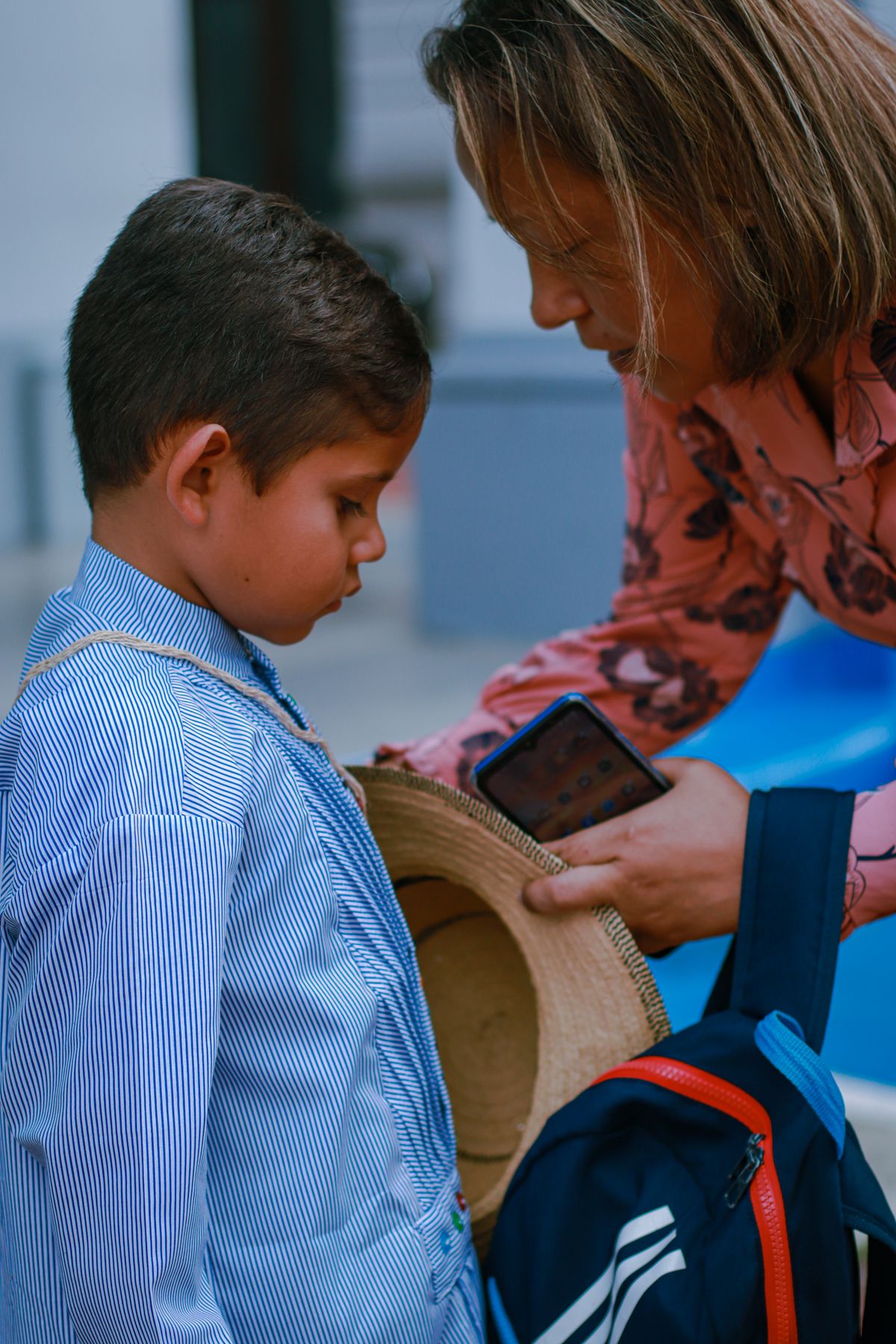
For four- and five-year-olds, back-to-school anxiety is almost always separation anxiety, and it's developmentally normal — separation anxiety is considered a normative part of early childhood rather than a warning sign by itself. What makes this year harder for many York Region families: full-day kindergarten is often a child's first experience of a structured instructional day, a real jump from a smaller home or daycare setting.
What it looks like: Crying at drop-off, clinging, repeatedly asking "when are you picking me up," and sometimes temporary regression in things like toileting or sleep.
What helps: A short, predictable goodbye — the same phrase or handshake every single time — a comfort item allowed in a backpack pocket, and resisting the urge to sneak out unnoticed. It feels kinder in the moment, but an unexplained disappearance usually makes the next goodbye harder, not easier.
By early elementary, most true separation anxiety has eased, but kids this age are hyper-attuned to routine and fairness. Anxiety here usually centres on the unknowns: who's my teacher, will my friends be in my class, what if I don't know where the bathroom is.
What it looks like: Repetitive questions about logistics, resistance to trying new things at school, and worry about "getting in trouble" for not knowing the new rules yet.
What helps: Concrete, factual answers do more here than general reassurance — a school walkthrough, a peek at the class list if it's available, or a written or drawn schedule of what the school day actually looks like, hour by hour.
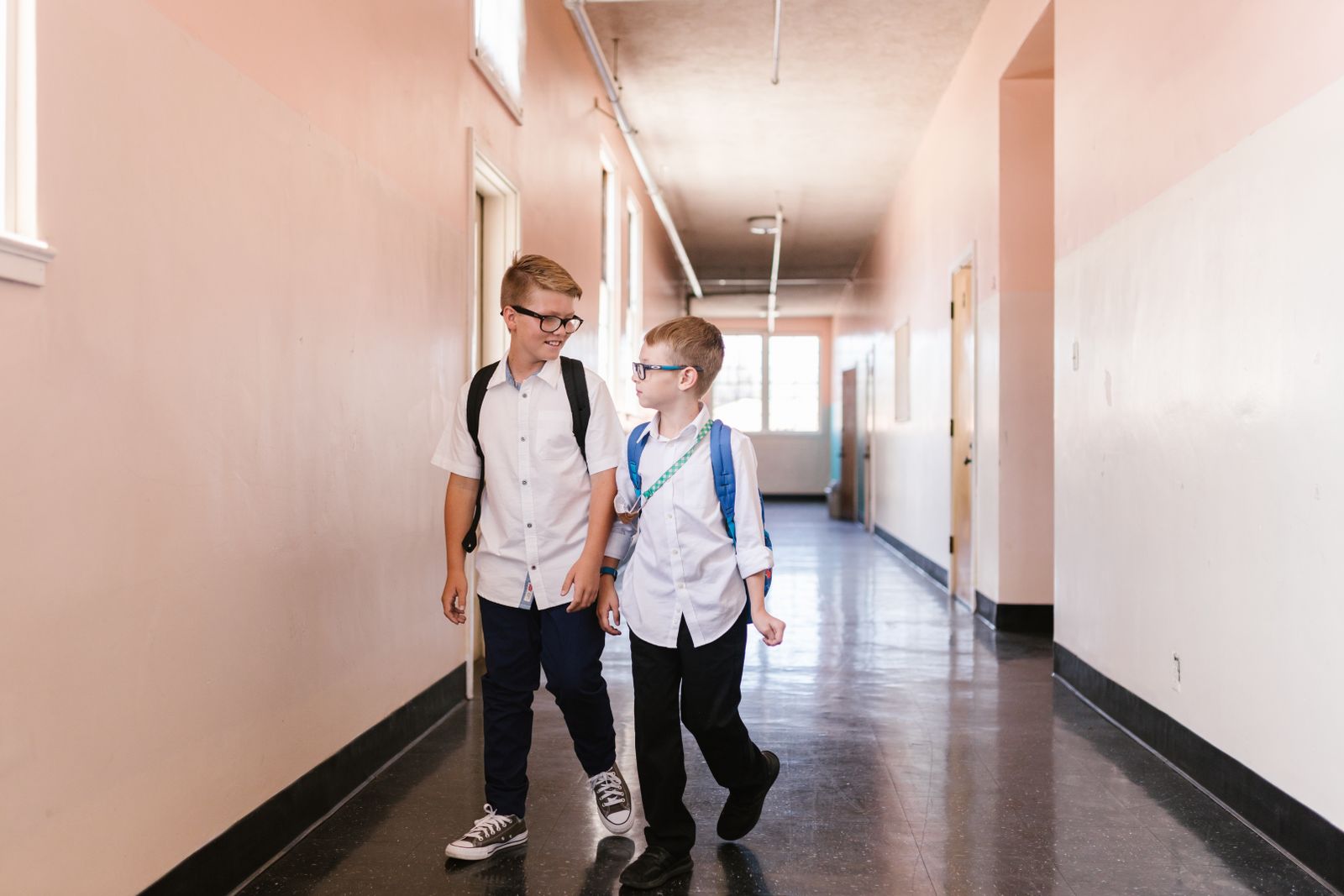
This is where academic performance and peer dynamics start to matter more than logistics. Report cards feel higher-stakes, friend groups start to shift, and comparisons with classmates' schedules or program placements creep in.
What it looks like: Worry about specific subjects or tests, comparing themselves to friends, and a new reluctance to talk about how school is "really" going.
What helps: Naming the specific worry out loud — kids this age can usually tell you exactly what's bothering them if asked directly rather than generally — and separating effort from outcome in how you talk about the year ahead.
Grade 7 and 8 students are managing bigger social stakes: shifting friend groups, more self-consciousness, and for Grade 8s specifically, an undercurrent of anxiety about the high school transition still a full year away.
What it looks like: Withdrawal rather than visible distress, more irritability than tears, and reluctance to discuss friendships or classes in any detail.
What helps: Low-pressure conversation — side-by-side, like in the car, rather than face-to-face — and resisting the urge to problem-solve immediately. At this age, being heard usually matters more than being fixed on the spot.
Research on childhood anxiety points to a consistent, somewhat counterintuitive finding: the more parents accommodate anxious behaviour — extra reassurance, letting a child skip anxiety-provoking situations, reshaping routines around the worry — the more that anxiety tends to stick around. A 2020 study on parental accommodation found that parents who saw their child as more anxious were also more likely to accommodate that anxiety, which can end up reinforcing it over time without anyone intending that. This doesn't mean withholding comfort — it means offering comfort in a way that builds confidence instead of avoidance.

| Instead of saying… | Try saying… |
|---|---|
| "Don't worry, you'll be fine." | "It makes sense that something new feels scary. I'm here." |
| "You have nothing to be nervous about." | "What's the part you're most worried about?" |
| Repeating reassurance five or six times | "I hear you — we've already talked about this, and you know the plan." |
| "If it's really bad, you can stay home." | "Let's figure out one small thing that would make today easier." |
| A long debate mid-meltdown | "I understand. We'll talk more about it after school, once we're both calmer." |
With Professional Activity days on September 2 and 3 ahead of the September 8 start for York Region boards, you've got a built-in window to ease into the new routine before it's actually go-time. Uncertainty is one of the biggest drivers of back-to-school anxiety at every age, so anything that makes the first day more predictable helps.
Some anxiety doesn't fade with time and routine, and that's worth paying attention to rather than pushing through. Somatic complaints are a particularly useful signal here: in one clinical study of children with diagnosed anxiety disorders, stomachaches were reported by roughly 70% of children, making them one of the most common physical markers of anxiety underneath the surface — especially when they cluster around school mornings specifically and vanish on weekends.
If your child is heading toward genuine school avoidance rather than first-week jitters, our guide to school refusal and school avoidance walks through what that looks like and how CBT and family-based support can help. And if the pattern looks more like your child saying "no" to everything rather than naming one specific school worry, the defiance trap is often what's actually happening underneath it.
If you're past week two or three and things aren't easing, it's a reasonable moment to loop in the school and consider therapy — not a sign anyone has done anything wrong. Cognitive behavioural therapy (CBT) is the most well-supported treatment approach for childhood anxiety. A 2021 meta-analysis of nine randomized controlled trials found that both individual and group CBT meaningfully reduce anxiety symptoms in children and adolescents, with individual therapy showing a modest additional edge specifically for teens.
In Ontario, publicly funded child mental health support often comes with a significant wait, which is part of why many York Region families turn to private practices for more immediate help. Many extended health benefits plans cover sessions with a Registered Psychotherapist or Social Worker — it's worth a quick check with your provider before you start.
At Young Sprouts Therapy, our anxiety therapy for kids and teens blends CBT with play-based approaches depending on your child's age, and our child therapy and family therapy programs build in dedicated parent coaching, so the strategies you learn in session actually carry over into weekday mornings — not just the therapy room.
If back-to-school anxiety in your house is going past the first-week jitters, reach out — we offer a free consultation and see families throughout Thornhill, Vaughan, Richmond Hill, Markham, and North York, both in person and online.
Book a Free 15-Minute Consultation →For most children, it eases noticeably within one to three weeks as the new routine becomes familiar. If it hasn't budged by week four, that's a reasonable point to seek extra support.
Yes, especially in the first couple of weeks. Separation anxiety at this age is developmentally typical. A consistent, brief goodbye usually helps it fade faster than a drawn-out or inconsistent one.
Generally, no. Allowing a child to avoid school because of anxiety tends to reinforce the anxiety rather than relieve it long-term. A short, predictable adjustment plan works better than avoidance.
This is common, especially in kids who "hold it together" all day and release the stress at home with the people they trust most. It doesn't mean the school is wrong or that home is the problem — it usually means your child needs a bit of support in both places.
Back-to-school anxiety is typically time-limited and eases with routine. School refusal is more persistent, often involves missed school days, and usually needs professional support to resolve. Our guide to school refusal and school avoidance covers this in more depth.
If anxiety is still intense after three to four weeks, involves missed school days, or comes with ongoing physical symptoms, disrupted sleep, or worry spreading into other areas of life, it's time to bring in extra support.
This article is for general information only. It is not a substitute for individual assessment, diagnosis or treatment. If you have concerns about your child's mental health, please speak with a qualified health professional.