Messy Handwriting or Dysgraphia? How Ontario Parents Can Tell the Difference
By Young Sprouts Therapy
· 16 min read
By Young Sprouts Therapy
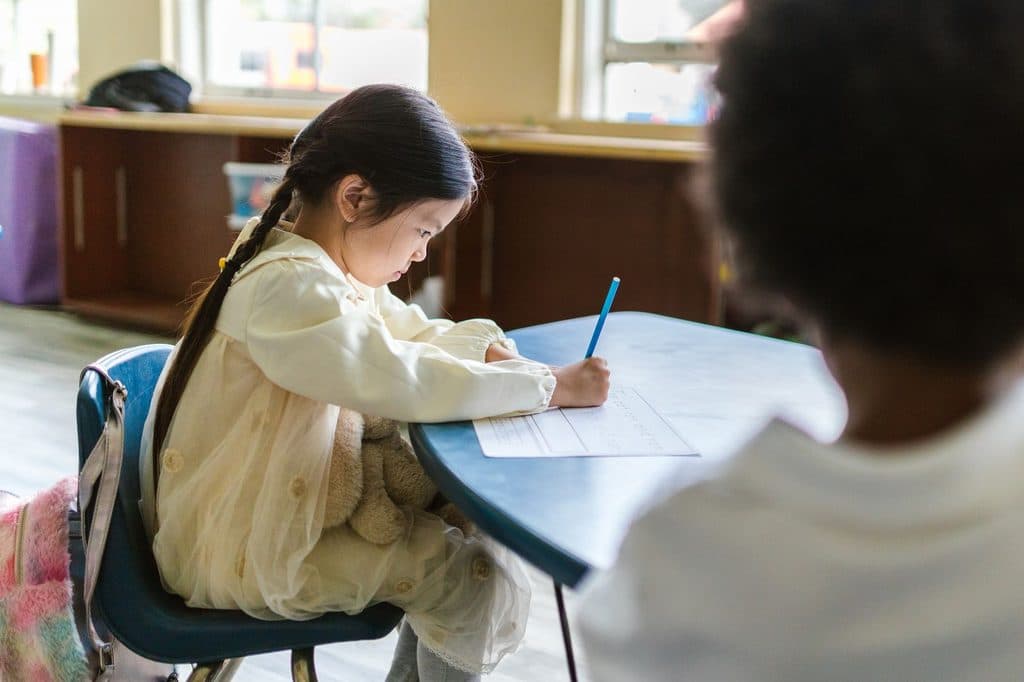
Sometimes it is rushes his work, or printing is difficult to read, or the gentler would benefit from more care with presentation. Whatever the wording, the message a parent hears is that their child is being careless. So you buy the pencil grips. You sit with them after dinner and ask them to try again, more neatly this time. And somewhere around the third redo, your child puts their head on the table and says they hate writing.
Here is what almost no one tells parents at that point: messy handwriting is a symptom, not a diagnosis. It is the visible end of a long chain, and the chain can break in at least four completely different places. Two children can produce identically unreadable pages for entirely different reasons, and the strategies that transform one child's writing will do nothing for the other.
This guide is written for parents in Vaughan, Thornhill, Richmond Hill, Markham and across York Region who are trying to work out whether what they are seeing is ordinary, developmentally normal messiness — or something that deserves a closer look. We will cover what handwriting should look like at each grade, a five-minute check you can run at your kitchen table tonight, what the word "dysgraphia" actually means (and why professionals disagree about it), and the specific steps for getting help inside the Ontario system.
| Messy is a symptom | Unreadable writing can come from motor, visual, attention, or language breakdowns — and the fix depends on which one. |
| Grade 3 is the pivot | Letter formation should be largely automatic by Grade 3. Later "writing problems" are often uncaught letter-formation problems. |
| Dysgraphia is slippery | It is not a standalone DSM-5 diagnosis. Handwriting struggles and written-expression learning disabilities are assessed by different professionals. |
| Ontario has three doors | Free school-based OT (SBRS), a psychoeducational assessment, and private pediatric OT — each solves a different piece. |
There is a temptation to shrug this off. Everyone types now.
Two things argue against that. The first is that Ontario reversed course on handwriting. Cursive writing, made optional back in 2006, returned as a mandatory expectation in the Ontario language curriculum starting in Grade 3 in September 2023. Children who were quietly compensating with printing are now being asked to learn a second, more demanding motor pattern.
The second is arithmetic. Writing tasks can occupy up to half of a child's school day. When the physical act of forming letters is still effortful, it consumes the working memory a child needs for the actual thinking — the spelling, the sentence, the idea. Research on writing development has linked struggling handwriting to lower self-perception, lower self-esteem and poorer social functioning, and the children affected are routinely mislabelled as sloppy or lazy rather than recognized as having a genuine difficulty.
It is also more common than most parents realize. A comprehensive clinical review found that between 10% and 30% of children experience difficulty with writing, with the exact figure depending on how you define the problem. Handwriting concerns are one of the most frequent reasons children are referred to occupational therapy.
Handwriting develops in a predictable sequence, and a great deal of early messiness is simply a child being where they should be. The table below is a general guide, not a diagnostic tool — children vary, and a single rough week means nothing.
| Grade | Typically developing | Worth a closer look |
|---|---|---|
| JK / SK | Scribbles, then copies shapes and lines; letters are oversized, reversed and inconsistent; may switch hands | Avoids all colouring, drawing and cutting; cannot copy a circle or cross by SK; no hand preference emerging |
| Grade 1 | Letters vary in size and float above or below the line; frequent reversals (b/d, p/q); spacing between words is uneven | Cannot form most letters from memory; writing is painfully slow; complains of hand pain after a few lines |
| Grade 2 | Letters mostly sit on the line; sizing steadies; reversals fade; still needs effort and reminders | Still forming letters from the bottom up or in unpredictable strokes; illegible to a teacher who did not see it being written |
| Grade 3 | Printing becomes largely automatic; cursive is introduced; output lengthens noticeably | Printing still takes visible concentration; cannot keep up copying from the board; written work is far below what the child can say aloud |
| Grades 4–6 | Handwriting is fluent and fast enough to keep pace with thinking; personal style emerges | Written output is short and simple compared with spoken ability; heavy erasing; refuses or delays any written task |
The single most important line in that table is Grade 3, and it is worth understanding why.
By roughly Grade 3, letter formation should have become automatic — a rote response requiring no conscious attention, the same way you no longer think about the individual letters when you sign your name. Children who have not reached automaticity by this point are substantially more likely to struggle with complex writing tasks later, because their higher cognitive functions are still tied up producing the letters. In other words, a Grade 5 student who cannot write a decent paragraph may not have a "writing" problem at all. They may have a Grade 2 letter-formation problem that no one caught.
Before you book anything, run this at home. Give your child a lined page and ask them to write a few sentences about their weekend — their own words, not copying. Then look at five things.
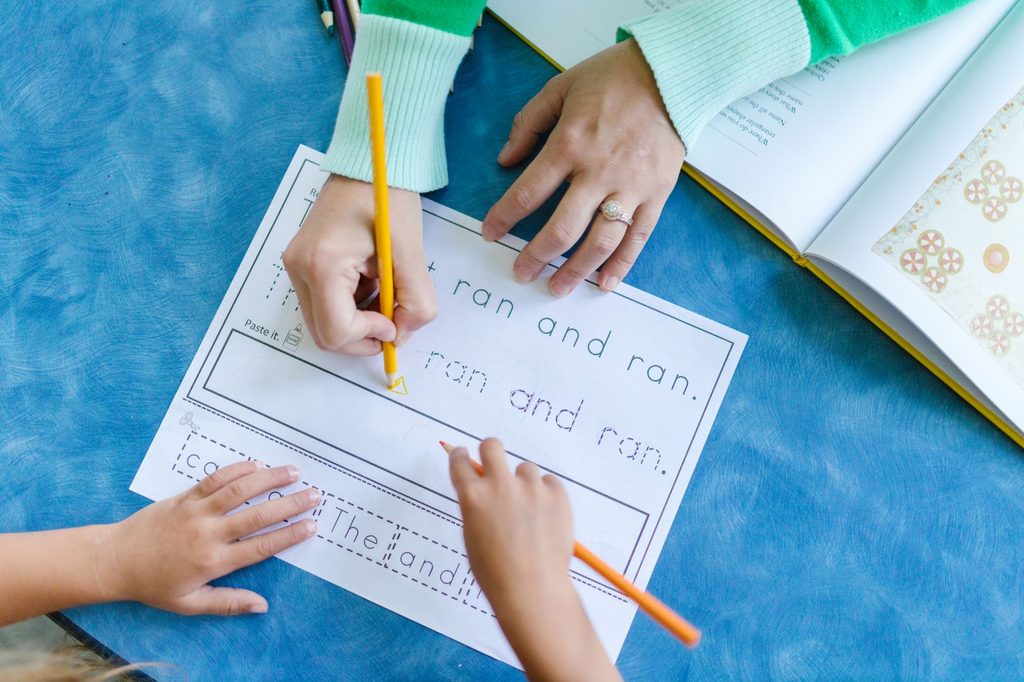
1. Legibility, not neatness. Cover the page, wait an hour, come back and read it cold. Can you read it without knowing what it says? Can your child read their own writing back a day later? Neat and legible are not the same thing, and legible is the one that matters.
2. Speed. Did the writing keep pace with their thinking, or were they still on the second sentence while the thought had moved on? Slow writing is one of the most reliable indicators of an underlying difficulty, and it is the one most often missed because slow work looks like carefulness.
3. Endurance. Watch what the writing looks like in the last line compared with the first. Does the grip tighten? Do they shake out their hand, reposition constantly, ask how much longer, or start pressing hard enough to emboss the page? Handwriting that degrades over a page is telling you something specific.
4. Avoidance. How much negotiation happened before the pencil moved? Avoidance is not laziness. It is almost always a reasonable response to a task that costs a child far more than it costs their classmates.
5. The say-write gap. This is the most revealing of all. Ask your child to tell you the same story out loud. If the spoken version is rich, detailed and well organized while the written version is three flat sentences, you have found the thing worth investigating. That gap between what a child knows and what they can get onto paper is the signature of a real writing difficulty, and it is the reason these children are so frequently underestimated.
One or two flags on an off day means very little. A consistent pattern across several weeks, in more than one setting, is worth acting on.
This is the section that most articles skip, and it is the one that changes what you do next. Writing is not a single skill. It requires higher-order thinking, language, working memory, visual processing and motor coordination all operating together — and a breakdown in any one of them can produce a page that looks the same from the outside.
| Root cause | What it tends to look like | Who assesses it |
|---|---|---|
| Postural and fine motor | Slouching or propping the head; tight, fatiguing grip; weak hands; letters degrade across the page; also struggles with scissors, buttons, laces | Occupational therapist |
| Visual-motor and visual-perceptual | Letters wander off the line; wildly inconsistent sizing and spacing; trouble copying from the board; poor drawing and puzzles | Occupational therapist (often with an optometry referral) |
| Attention and executive function | Starts neatly and falls apart; strong verbally but cannot plan or organize written work; loses track mid-sentence | Psychologist, psychiatrist or developmental paediatrician |
| Language and orthographic processing | Persistent spelling errors even on familiar words; struggles to retrieve how a letter is formed; reading difficulties often present too | Psychologist, or speech-language pathologist |
Most children who struggle are not a clean single column. They are a blend — and that is the finding, not a complication. Researchers at Johns Hopkins reviewing the field concluded that developmental writing difficulties are strikingly diverse in both how they present and what causes them, and argued that useful assessment has to be grounded in how normal writing actually works rather than in a single label.
This matters practically. If a child's difficulty is in the motor and postural column, handwriting drills at the kitchen table may genuinely help. If it sits in the language column, those same drills will produce frustration and nothing else — and the tears at homework time are not resistance, they are a signal that the intervention is aimed at the wrong target.
Here the language gets slippery, and parents deserve a straight answer.
"Dysgraphia" is not a single agreed-upon diagnosis. In the DSM-5, dysgraphia sits inside the broader category of specific learning disorder, but is not defined as a standalone condition. Historically it has been used to describe at least three different things: a motor or "peripheral" difficulty in producing letters, a spatial difficulty affecting spacing and layout, and a language-based difficulty involving spelling and orthographic memory. Different professionals use the same word to mean different things, which is precisely why families get contradictory answers.
There is one distinction that catches almost every parent by surprise. Educational assessors typically use the term specific learning disability in written expression, and that evaluation examines spelling, grammar, punctuation and how a child constructs sentences and paragraphs. As one learning-disability specialist puts it plainly, poor handwriting can be a red flag but does not by itself constitute the disorder — and handwriting itself is often not even part of the formal evaluation.
Read that again, because it explains a very common and very frustrating experience: a child can have significant, genuinely disabling handwriting problems and not meet criteria for a written-expression learning disability. The handwriting piece is the occupational therapist's territory. The written-expression piece belongs to a psychologist. Families who only walk through one of those doors often leave with half an answer.
It is also worth knowing that these difficulties rarely travel alone. Roughly 30% to 47% of children with writing problems also have reading difficulties, about half of children with developmental coordination disorder have impaired writing, and writing struggles are near-universal among children with ADHD or autism. If your child already has one diagnosis, handwriting difficulty is not a coincidence.
Ontario does not use IEPs and 504 plans the way American articles describe. Practically:
Pencil grip is where well-meaning parents do the most unnecessary work, so let us be precise.

Grasp develops in a predictable order:
| Approximate age | Typical grasp |
|---|---|
| 1–2 years | Whole-fist (palmar) grasp, movement from the shoulder |
| 2–3 years | Digital pronate grasp — fingers on the shaft, wrist stiff |
| 3–4 years | Static tripod or quadrupod, movement still coming from the wrist and forearm |
| 4–6 years | Dynamic tripod or quadrupod, with the fingers themselves doing the work |
The part almost no one says out loud: an unusual grasp is not automatically a problem. Several grasp patterns — including the four-finger quadrupod and the adapted tripod — are perfectly functional and are not associated with worse legibility or speed. What matters is the outcome, not the aesthetics.
Ask three questions instead:
If the answers are yes, yes and no, leave the grip alone. Forcing a grip change in a child who is writing well and comfortably costs them fluency and confidence and buys nothing. The grips that genuinely warrant attention are the ones that lock the fingers or tuck the thumb across the shaft, because they eliminate the small finger movements that fast writing requires — and by roughly age six or seven, grasp patterns are well established and difficult to change without skilled help.
This is the most underused resource in the province, largely because parents have never heard of it.
School-Based Rehabilitation Services (SBRS) provides occupational therapy, physiotherapy and speech-language services to students in publicly funded schools, at no cost to families. In York Region and Simcoe County, SBRS is delivered through the Children's Treatment Network, which manages referrals and coordinates the visiting therapists. SBRS occupational therapists work on exactly the skills in question: printing, cutting, fine motor development and self-care.
Two things to know. First, referrals are initiated through your child's school — start with the classroom teacher or the special education resource teacher and ask directly whether an SBRS occupational therapy referral is appropriate. Second, SBRS is a short-term consultative model. An OT may observe your child, train the classroom team and recommend strategies rather than provide ongoing weekly therapy. It is genuinely valuable, and it is not the same thing as a course of treatment.
A note on a common point of confusion: School Health Support Services, administered by Ontario Health atHome, is a separate program covering medical supports such as nursing. For students in private schools or home-schooling arrangements, occupational therapy may be arranged through that stream instead.
If the say-write gap is significant, spelling is persistently poor, or reading is also affected, a psychoeducational assessment is the route to a formal learning disability identification and to the accommodations that follow. Your school board can be asked to conduct one, though waitlists are typically long; private assessments are faster and often partially covered by extended health benefits.
Most York Region families arrive here for one of three reasons: the school route produced consultation rather than treatment, the waitlist is longer than the school year, or they want the intensity and consistency that weekly sessions provide. Private OT can also begin immediately, without waiting for a diagnosis — which matters, because early intervention consistently produces the greatest gains.
Occupational therapy is covered under most extended health benefit plans that include Registered Occupational Therapists. You can read more about how coverage for pediatric occupational therapy typically works before you book.
Not worksheets. That is the first thing worth saying.

An assessment usually starts with a writing sample under real conditions, then works backwards through the chain: posture and core stability, shoulder and hand strength, in-hand manipulation, visual-motor integration (often using a standardized measure such as the Beery VMI), letter formation patterns, speed and endurance. Recommended practice includes looking at pencil grip and writing posture as part of that picture.
Treatment then targets whichever links are weak. That might mean building postural stability so the hand has a stable base to work from, developing the small finger movements that fluent writing depends on, or reteaching letter formation using a structured multisensory method.
One point from the research deserves emphasis, because it contradicts what a lot of well-intentioned home practice assumes: teaching motor skills alongside orthographic skills is more effective than teaching motor skills alone. Practising the shape of a letter is not the same as building the mental representation of that letter. A well-validated approach has the child study a model with numbered arrow cues, visualize writing the letter, write it from memory, then check their version against the model — combining motor practice with the memory work in a single loop.
Timelines are more encouraging than most parents expect. Across intervention studies, children generally show measurable improvement after roughly 20 sessions delivered over several weeks. This is not a years-long project.
Ten focused minutes, five days a week, beats an hour on Sunday. No worksheets, no redoing homework in a neater hand.
Weeks 1–2: build the base. Skip the pencil entirely. Wheelbarrow walks, animal walks, crab walks, monkey bars, wall push-ups — anything that loads the shoulders and core. Then five minutes of hand work: tearing paper, using tongs to sort snacks, popping bubble wrap, rolling and pinching playdough, using a spray bottle in the garden. You are building the machinery, not the output.
Week 3: add vertical. Move all drawing, colouring and letter practice to a vertical surface — an easel, a window with washable markers, paper taped to the wall, or a slant board. Vertical work automatically positions the wrist and shoulder correctly and does the postural coaching for you.
Week 4: letters, properly. Choose the five letters your child gets wrong most often. For each one: look at a model with arrows showing stroke order, trace it large in the air or in a tray of salt, write it from memory, then compare it to the model and circle their best attempt. Five letters, five days. Then choose five more.
Throughout, protect writing as something enjoyable somewhere in the week — a note in a lunchbox, a birthday card, a message on the fridge, a comic. A child who associates every pencil with correction will avoid pencils.
Ontario teachers can put many supports in place immediately, without a diagnosis or an IEP. Most will, if asked clearly. Copy and adapt:
Hello [Teacher's name],
I wanted to follow up on the comment about [child's name]'s printing. We have been paying attention at home, and what we are noticing is that the difficulty seems to be less about care and more about effort — [he/she/they] can tell me a detailed story out loud but produces only a few short sentences on paper, and complains of hand fatigue after about [X] minutes of writing.
Before we pursue anything further, I wanted to ask whether a few classroom supports might be possible:
- Reduced copying from the board, or a printed copy of notes
- Extra time on written tasks, or a reduced volume where the goal is content rather than output
- The option to show understanding orally for some assignments
- Access to a keyboard for longer written work, with handwriting practice continuing separately
I would also like to ask whether a referral to School-Based Rehabilitation Services for an occupational therapy consultation would be appropriate.
Thank you — I would welcome a short conversation if that is easier.
[Your name]
One caution worth keeping in mind: accommodations reduce the stress of writing, but they do not resolve the underlying difficulty, and technology supports such as speech-to-text do not address higher-level planning and organization. Handwriting practice should continue alongside them. Forming letters by hand appears to contribute something to learning that typing does not replace.
There is an emotional cost here that shows up long before anyone uses the word dysgraphia.
A child who is repeatedly told to slow down, try harder or be neater — while genuinely trying as hard as they can — draws the obvious conclusion. They decide they are bad at school, or careless, or not smart. Because writing is the medium through which most of their knowledge is assessed, the gap between what they know and what appears on the page starts to look, to them, like the truth about their ability.
Watch for the signs: refusing to start, tearing up work, pre-emptively calling themselves stupid, headaches and stomach aches on days with written tests, and outright avoidance. If frustration around writing has spilled into your child's broader sense of themselves, that is worth addressing directly alongside the motor work. Some children need both an occupational therapist and someone to help them rebuild their belief that they are capable — and in children who feel criticism intensely, especially those with ADHD, the daily correction that handwriting invites can be genuinely painful. Our article on rejection sensitive dysphoria in children covers that pattern in more detail.
The most useful thing you can say to your child is the true thing: this is hard for your hands, not for your brain, and we are going to work on the hands.
Young Sprouts Therapy provides pediatric occupational therapy in Thornhill and Vaughan, serving families across York Region including Richmond Hill, Markham, Aurora, Newmarket and North York. Our occupational therapists assess the fine motor, visual-motor, postural and sensory foundations of handwriting and build a targeted plan — with practical strategies for home and, where helpful, direct collaboration with your child's school.
Because handwriting difficulty so often arrives tangled up with frustration, anxiety or low self-esteem, our team also includes Registered Psychotherapists and Registered Social Workers, so a child who needs support on both fronts can receive it in one place.
We offer a free 15-minute consultation. If you are not sure whether what you are seeing warrants an assessment, that call is a reasonable place to start.
No. Messy handwriting is extremely common and often developmentally normal, particularly before Grade 3. It becomes a concern when it is persistent, when writing is slow or physically uncomfortable, when your child avoids written work, or when there is a clear gap between what they can express aloud and what they produce on paper.
Letter formation is generally expected to become automatic by around Grade 3. Children who have not reached that point are more likely to find later, more complex writing tasks difficult, because effort is still being spent on forming the letters themselves.
In Ontario, occupational therapists assess and treat the motor, visual-motor, postural and sensory components of handwriting, but do not diagnose learning disabilities. A specific learning disability in written expression is identified through a psychoeducational assessment by a psychologist or psychological associate. Many children benefit from both.
Only if it is causing a problem. If your child's writing is legible, reasonably fast, and does not cause pain or rapid fatigue, an unconventional grip is usually fine. Grips that lock the fingers or tuck the thumb across the pencil are more likely to interfere and are worth having assessed.
Yes. School-Based Rehabilitation Services provides OT to students in publicly funded schools at no cost, delivered in York Region through the Children's Treatment Network. Referrals start with your child's school. It is a short-term consultative service rather than ongoing weekly therapy.
No. Private pediatric OT can begin with an assessment, without any prior diagnosis or physician referral. Early intervention is associated with the greatest gains, so waiting for a diagnosis is rarely necessary.
Research on handwriting intervention generally shows measurable improvement after roughly 20 sessions over several weeks, though this depends on the child's age, the underlying cause and how consistently strategies are practised at home.
Keyboarding is a valuable accommodation, but handwriting practice should continue alongside it. Writing by hand appears to support learning in ways typing does not fully replace, and handwriting remains necessary for many everyday tasks. Technology also does not address planning and organization difficulties.
Writing difficulties are very common in children with ADHD, and handwriting problems frequently co-occur with reading difficulties, developmental coordination disorder and autism. If your child has one of these diagnoses, handwriting difficulty is worth assessing rather than assuming it is simply carelessness.
Book a free 15-minute consultation with Young Sprouts Therapy. We'll help you sort ordinary messiness from a handwriting difficulty that deserves a closer look — in person in Thornhill/Vaughan or virtually across Ontario.
Book a Free Consultation →Learn more about our pediatric occupational therapy services, or meet the Young Sprouts Therapy team.
This article is intended for general education and does not constitute medical advice, assessment or diagnosis. Every child is different. If you have concerns about your child's development or writing, please speak with a regulated health professional. To discuss your child's situation with our team, book a free 15-minute consultation. If your child may be in immediate danger, call or text 9-8-8 or call 911.